Naonori Kawamura, 2026
In 1999, through his production company Kazumo, Naonori Kawamura spearheaded the experimental public television program “Reading Journey.” The series was an effort to pioneer new ways of presenting works of literature on television, giving free rein to filmmakers in the process—in addition to Shinji Somai, directors Kiyoshi Kurosawa and Shinji Aoyama counted among the participants. Shortly after production ended on his installment in the series, Somai passed away from cancer on September 9, 2001. As Kawamura notes: “At the time, it never crossed the minds of any of the staff that Gassan would become director Shinji Somai’s final work.”
We’d like to express our immense thanks to Kawamura for these notes and for his generous help in organizing our screening of Somai’s Gassan, taking place on December 10, 2026 at Brooklyn Academy of Music, marking the film’s US premiere.
Most people have likely forgotten—or perhaps never even noticed—that the television screens we look at today underwent a major technological revolution at the beginning of this century.
Previously, television programs were produced across different countries using a variety of methods and standards. With the advent of a new, globally unified standard, it became possible to display images on larger screens with far greater nuance in both color and sound, while also facilitating the international exchange of programs. Furthermore, this technological leap in television even began to influence the film industry, which had long been the frontrunner in visual media. This was the arrival of High Definition (HD).
The 50-minute film Gassan, which you are about to watch, was produced in 1999 when Japan’s public broadcaster, NHK, invited independent production companies to develop prototypes for the HD era. At that time, "broadcasting" using this new format had not yet begun; the work was, in effect, a prototype from the era of "experimental broadcasting."
The call for proposals included a condition that was—in a way typical of Japanese public institutions at the time—quite amusing!
The premise was this: while it would certainly be possible to create an ambitious, large-scale project with an unlimited budget, the goal here was to challenge private production companies to deliver something superior to existing work—all while staying within the standard production budget for a single episode (50 minutes) of a television drama. The format was left entirely open.
It was a condition, to be sure, that perfectly reflected the mindset of a television network in the age of mass media. My production company, Kazumo, proposed a series titled "Reading Journeys" (Rōdoku Kikō), which could be produced for just over half the cost of a single 50-minute episode of a typical television drama series.
The "Reading Journeys" series, which aimed to pioneer new forms of television programming through the use of innovative visual technology, focused on three key points.
The first was a fresh approach to "language." In any country, language possesses two distinct faces: the written language—used in novels, poetry, and print media—and the spoken language, used in the context of everyday life. Every nation possesses literary masterpieces written in its own formal, written language. Yet, on television, dramas unfold through spoken dialogue, and news or information programs are delivered by presenters using the vernacular. While the written language reigns supreme in books and newspapers, it is rarely given much attention in television or daily life.
Nevertheless, the written language carries a long-standing tradition—a refinement honed over generations by the pens of many. It possesses a unique strength, capable of expressing meaning with precise accuracy. Literary masterpieces arguably represent the pinnacle of this written culture. For a long time, "readings"—a method allowing audiences to listen to and savor such fine prose—have been used to convey the allure of the written word in its original form. However, such readings are typically confined to limited settings. By bringing these readings to television, one could feature well-known actors and—much like in cinema—incorporate not only visuals but also music and sound design to create a multi-dimensional experience. If a program centered on the written word were crafted using modern visual technology, it could reveal the raw, untapped charm of the written language to a television audience far larger than any that could attend a live reading.
This new program would serve as a "journey"—a voyage into an uncharted world, with the realm of the written word (literature) captured through the lens of high-definition (HD) cameras.
As the concept took shape, specific parameters were established for the program. Any text read or displayed must be the original language as written by the author. While omissions are permissible—due to the constraints of broadcast time—no words may be added that were not in the original text. The selection of which passages to include (subject to the copyright holder’s consent) is left to the director. Only one actor is to perform the reading. The program duration is set at 45 to 50 minutes.
There were also practical, technical constraints. At the time, stable, studio-grade HD cameras had only just begun to be installed in the studios of a few major television networks; portable HD cameras suitable for location shoots were scarce, and even professional rental companies held very few in their inventory. Since the private technical firm could not assume full responsibility for production, the broadcasting station agreed to cover the costs associated with the HD camera equipment.
As the concrete implementation plan for the pilot projects took shape, specific guidelines were established: the budget for each experimental program would cover a production scale consisting of four days of on-location shooting and one day of post-production. The plan called for commissioning three directors per year to create three pilot works—with the possibility of engaging three new directors the following year, should the initial efforts prove successful.
As the project progressed, it became clear that film directors, rather than television directors, were better suited to helm this series. When I sought feedback from colleagues, most television producers interpreted the concept as a new type of travelogue—one that used dramatic readings to illustrate classic literary works. Film directors, by contrast, viewed it as an opportunity to craft short, literary-themed films centered on these readings. The latter interpretation was much closer to the project’s core intent. Consequently, the next logical step was to bring film directors into the realm of television production.
I began reaching out to mid-career film directors—individuals whose work had already garnered critical acclaim and who might find such a project compelling—to invite them to direct a pilot piece.
Shinji Somai, who directed the episode Gassan, was one of the directors commissioned during the second year of the series. Already recognized as a brilliant talent with successful films to his name—including Ah, Spring (1999), which topped domestic "best-of" lists and won an award in Berlin—he was also known for his unconventional directorial style, which often defied the rigid, standardized production schedules typical of the industry. (Indeed, so many anecdotes exist about his on-set behavior that they could fill an entire book.)
Somai was a man who paid little heed to his appearance while working; when we first met at a Starbucks in Shibuya—often described as the "Times Square" of Tokyo—he arrived wearing geta (traditional wooden sandals). Once I had outlined the project, the directors I spoke with—every single one of them—invariably asked the same question: "So, you say 'masterpiece,' but what exactly are you planning to film?" To help them decide, I had prepared a list of about a hundred notable works of modern Japanese literature—books written in the country’s vernacular over the last 150 years or so.
"This is just for reference, of course; the primary choice should be whatever work you personally feel drawn to adapt," I would explain. Most directors took the list home to consider their options before making a decision—but Somai was different. He glanced at the list, spotted Gassan, and made an instant choice: "All right, let’s do Gassan. I’ll need an HD camera for four consecutive days on location—we’ll shoot it where the story is set. Hiroshi Machida on cinematography, Kimura on lighting—and if Akira Emoto is available, let’s get him for the cast. As for the rest of the crew, I’ll leave that to you. And you can handle the first draft of the script." In the blink of an eye, the entire production plan was settled right there on the spot.
Two days later, Somai set off alone for a location scout in the remote area—facing the Sea of Japan in the Tōhoku region—that serves as the setting for Gassan. His decision had been so swift that I couldn't help but wonder if he had already read the novel and been waiting for an opportunity to bring it to the screen.
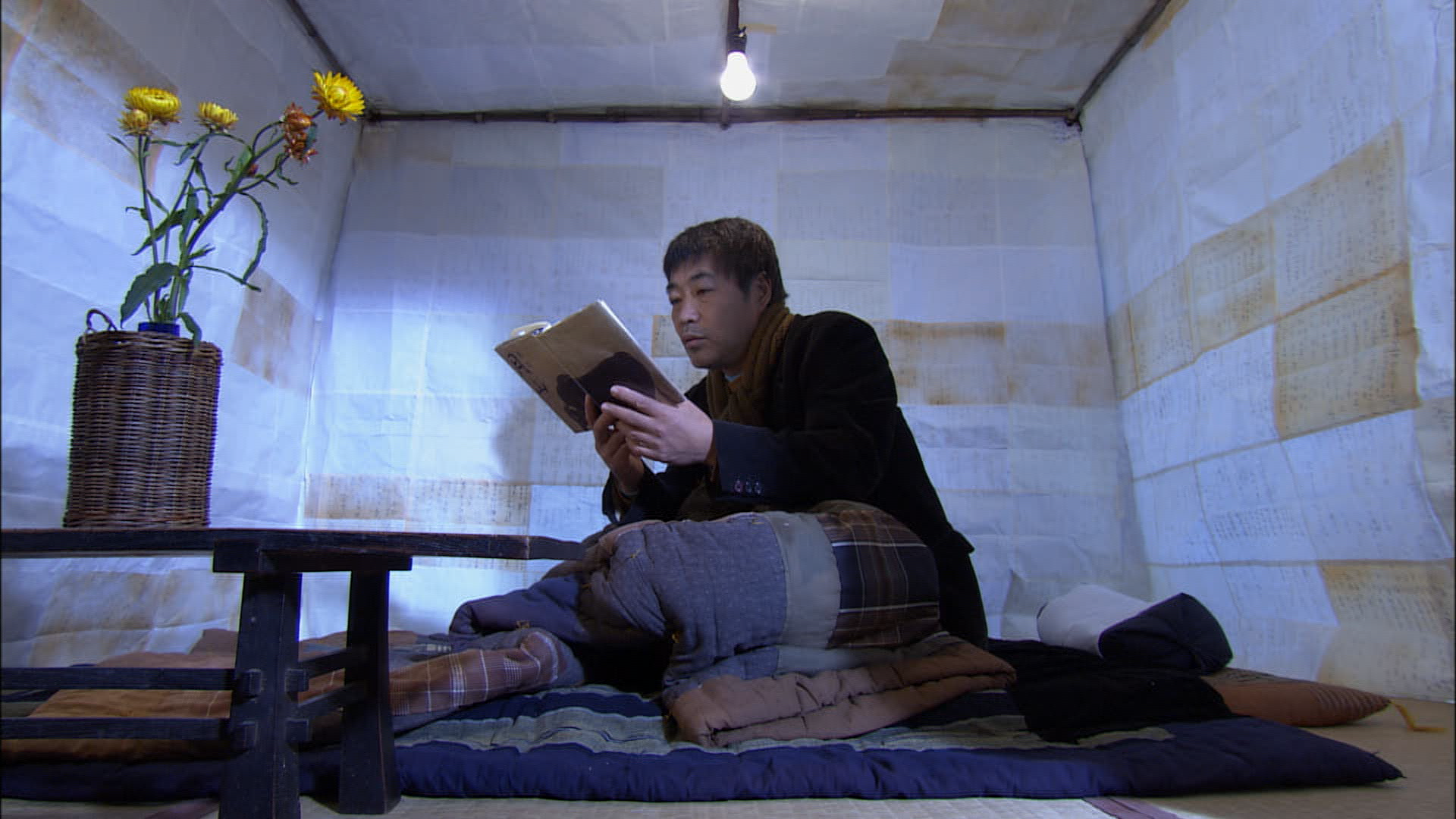
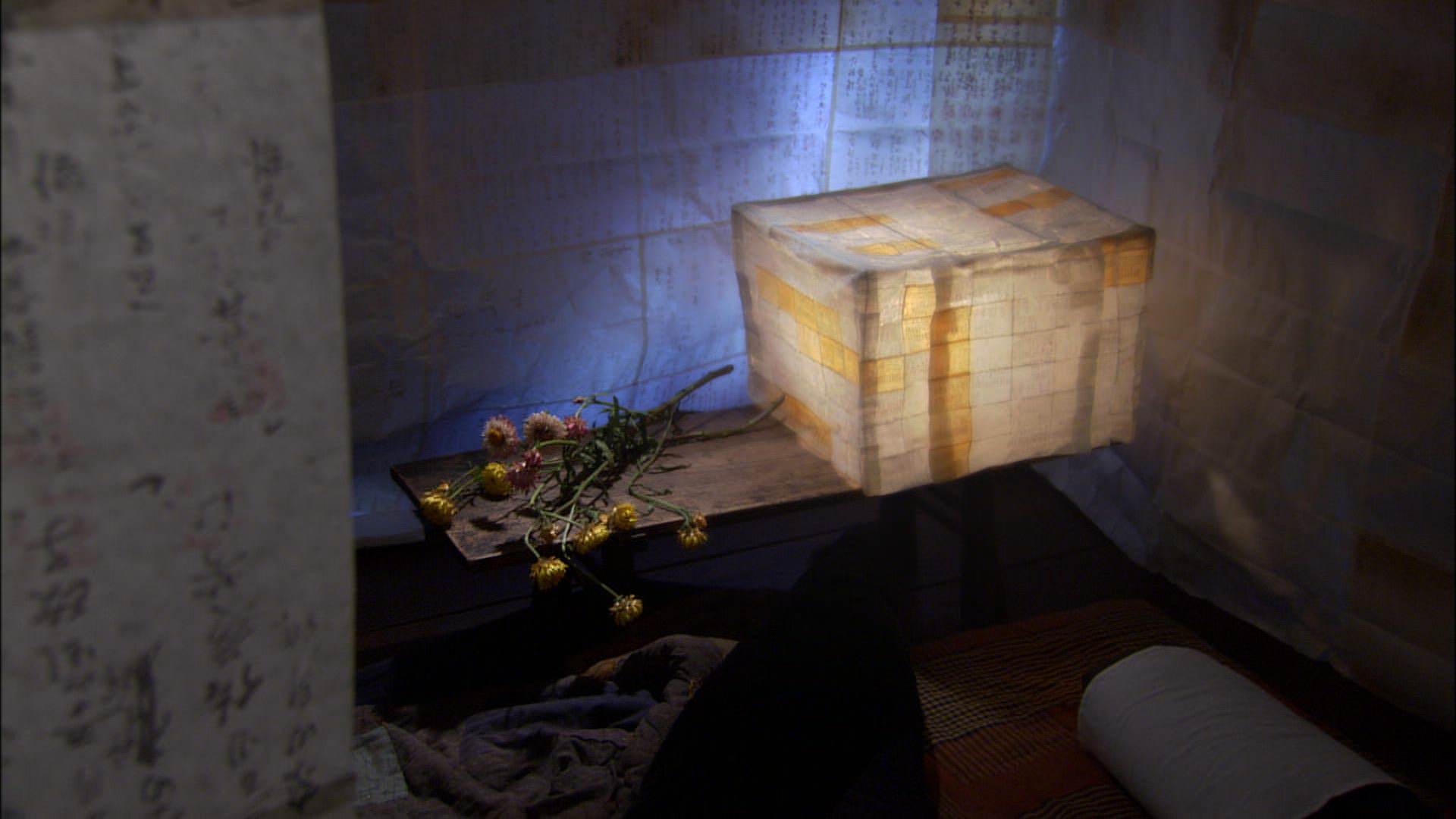
Gassan is a novel by Atsushi Mori, published in 1973. The following year, it won the Akutagawa Prize—Japan’s most prestigious literary award. Mori was 62 at the time; while he was not a "newcomer" in the literal sense, he had never before enjoyed any significant spotlight, and his win drew attention as the debut of an "elderly newcomer." The protagonist of the novel is also a man in his later years—someone who is uncertain about what he has done with his life thus far, and equally unsure of what he might do next. At the beginning of the novel, a passage written in a classical, Chinese-influenced literary style is presented: "If one does not yet know life, how can one know death?" The story follows a man in his later years—a man who has lived a life of inaction—as he spends a winter in a quiet village at the foot of Mount Gassan, buried deep in snow, seeking to understand the true nature of his own life and death. He takes up residence in a temple, where he fashions a mosquito net out of traditional washi paper—paper that originally contained the village’s kakochō (a register of the deceased). The villagers here live in harmony with a harsh, unforgiving natural environment. Yet, unlike the grim, life-or-death dilemmas found in The Ballad of Narayama—which shares a similar setting—there is no such profound conflict here. A man who nearly becomes a mummy after getting lost in the mountains simply returns to his ordinary life once rescued; an extramarital affair between a man and a woman does nothing to alter the social fabric of the village. As the winter beneath the snow—a time that blurs the line between dream and reality—finally draws to a close, spring arrives, and the landscape around Mount Gassan regains its verdant cloak. Meanwhile, a stink bug, having struggled to climb out of a bowl, finally reaches the rim after a long, arduous effort; it unfurls its wings, takes flight, and vanishes from sight.

This long, continuous shot of the stink bug taking flight was the final take of the production. Such extended shots involving animals are a recurring feature in the works of director Somai. Once the lighting crew—well-accustomed to this process—had finished their setup, they quietly slipped away. Only director Somai and cinematographer Machida remained in a corner of the temple, keeping their eyes fixed on the stink bug inside the bowl.
"Unlike film, with HD we can keep the camera rolling as many times as we like—it’s such a relief," remarked Machida, praising the advancement in technology. Three hours later, just as described in the novel, the stink bug effortlessly took flight from the bowl. That was the wrap. The entire shoot was completed in four days. The HD camera equipment and the production crew promptly departed the filming location, and a tranquil, everyday calm returned to the village—a village that looks out toward Mount Gassan—as if nothing had ever happened.
At the time, it never crossed the minds of any of the staff that Gassan would become director Shinji Somai’s final work.
As the author, Atsushi Mori (1912–1989), had already passed away, the completed film was shown to his surviving widow. She remarked, "It is a wonderful adaptation of the world of the novel into another medium. If my husband were alive to see it, he would surely have been overjoyed."
Subsequently, the “Reading Journey” series was broadcast on satellite channels in Japan over a five-year period starting in 2000; it was later aired on terrestrial television and rebroadcast on private CS (satellite) channels. When a week-long memorial screening of director Somai’s films was held following his passing in 2002, HD projection equipment was brought into the cinema. Gassan was screened daily as the final feature of each day, and every showing was packed to capacity. This demonstrated the successful multi-use potential of HD for both television and cinema. Following this, standard television production projects began to shift entirely toward HD.
In 2009, four of Somai’s films—including Gassan—were invited for screening at the Locarno Film Festival in Switzerland, followed by screenings in Paris. This 2026 presentation marks the film’s premiere in the United States.
Naonori Kawamura
(October 6, 2026)
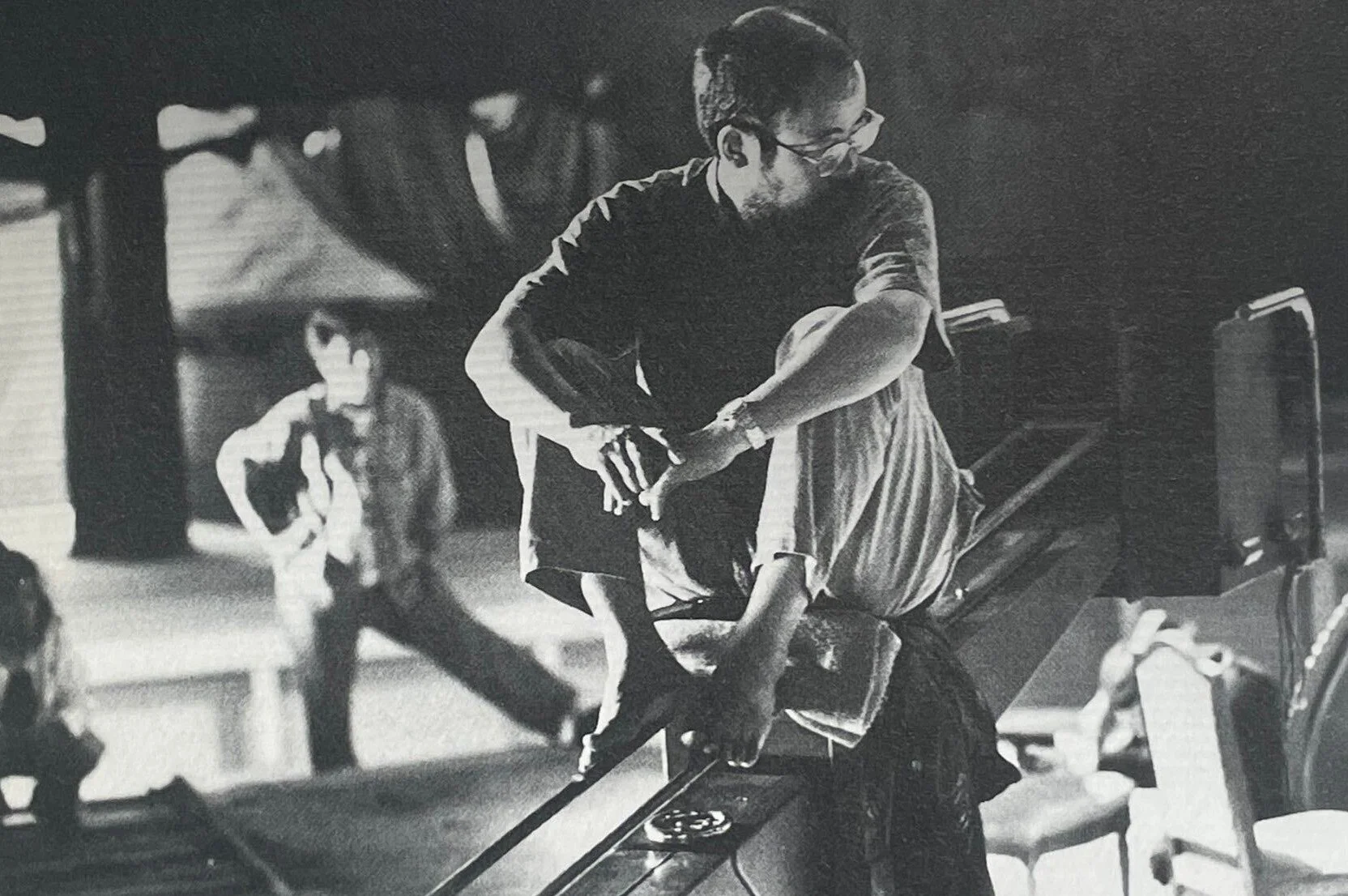
Shinji Somai in 1987.
xx