A Fickle Man, or Portrait of Boris Barnet as a Soviet Director
Bernard Eisenschitz, 1991
The following was originally published in Inside the Film Factory: New Approaches to Russian and Soviet Cinema, edited by Richard Taylor and Ian Christie.
This text accompanies Boris Barnet, A Soviet Poet, a retrospective of Barnet’s films taking place from March 13 - April 11, 2026 at Metrograph.
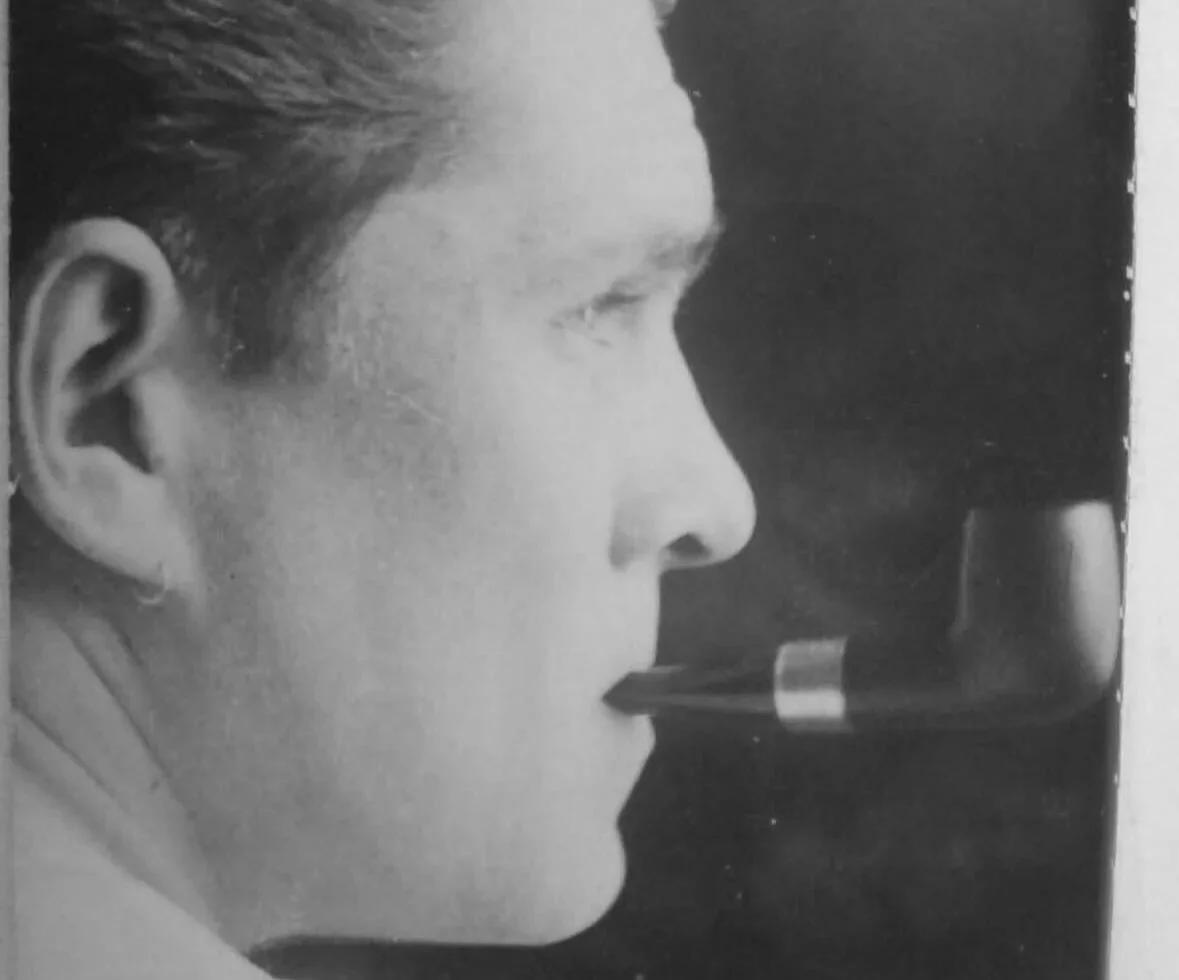
Henri Langlois used to show By the Bluest of Seas (1936) and The Wrestler and the Clown (1957) so regularly at the Cinémathèque Française that intrigued audiences ended up actually going to see them. We used to wonder at a plot that had to be followed without any translation, but even more about such an 'American' director amid the acknowledged Soviet classics. Despite this misunderstanding (as it turned out), there could be no mistaking Barnet’s immense adaptability in the face of any kind of material, his narrative skill, his freedom and his lack of interest in any kind of 'message.’
It is always irritating not to know more about a film-maker, even though the films themselves should suffice. A short interview by Georges Sadoul seemed to substantiate the discovery–together with Godard's oft-quoted remark about the 'famous Triangle style’ of which Barnet was the heir–but only after the director’s death.
Sadoul spent the evening of 12 September 1959 with Boris Barnet. Six years later he wrote:
I should perhaps have asked Barnet more about his work and creative concerns at the end of the 50s. But as a historian preparing a study of Soviet silent cinema I concentrated instead, rather too much perhaps, on the beginning of his career.
Barnet himself, however, ranged a little more widely:
In thirty-seven years I’ve managed to direct about twenty films, most of which have not satisfied me at all. My favourite ones are The Girl with a Hatbox (1927), Outskirts (1933) and Annushka (1959), which I've just finished. I also quite like The Wrestler and the Clown, which I completed after the death of Yudin, who had only directed one reel. But I don't care at all for Bountiful Summer (1951), which seems to be admired in France. That's a film which suffered too much from the constraints of a difficult period.
Speaking generally about my attitude towards cinema, I like comedy best of all. I like to insert amusing scenes into dramas and dramatic scenes into comedies, but of course it’s all a matter of proportion.
With a few obvious exceptions, all my films, for better or worse, deal with contemporary life and its problems. When I have had the option, I have always chosen contemporary subjects, even though it is not always easy to tackle these.
In this connection, let me tell you one of my favourite stories. A great Japanese painter reviewed his life and work as follows: from twenty to forty he did still lifes and landscapes; between forty and sixty he painted birds; then from sixty to eighty geese, ducks, chickens–all sorts of domestic animals. And it was only at the beginning of his hundredth year that he felt ready to portray humans.
My ambition has also been to show the place of man in contemporary life. I could and would not wait that long before taking my chance. But I wonder now if I will live long enough to provide a true picture of man.
I am not and never was a man with theories. I always found my material in everyday life. However I would like one day to introduce mythological themes in depicting the Krivoi Rog brigades and their dramatic conflicts. But am I ever likely to have the chance to tackle such a big subject?
This interview, not published until six years later, was the only occasion apart from his films when we heard the voice of Barnet. Even if it does not offer much insight, the sound of his voice is there: this is the man himself speaking, not a conventional figure of the period. All the more reason to understand why, and to what extent, he remains the great unknown of Soviet cinema. Barnet’s films have not been ignored or unavailable (other than those from the war period and the very last ones): he has been duly recognised by historians of all shades as the founder of Soviet comedy–and The Girl with a Hatbox justifies that reputation, as does The House on Trubnaya (1928), while By the Bluest of Seas remains unclassifiable, and certainly not a comedy even if it provokes laughter. Of course, as with most directors, his range is much greater than that of a single genre.
Yelena Kuzmina demonstrated this refusal to see him in other terms when I interviewed her in Moscow in November 1977. While she spoke with insight about her work with Kozintsev and Trauberg (The New Babylon) and with Romm, she had no fond memories of Barnet, despite having been (reluctantly, she claimed) his wife and leading actress at the beginning of the 1930s:
At that time films were like banners, with such epics as Potemkin and Storm Over Asia (1929). There were also the comedies with Igor Ilyinsky, which seemed much less interesting and were considered things done for money rather than as art. But Barnet risked filming things differently, showing the lives of ordinary, unimportant people and their aspirations. He dealt with people instead of statues.
I was in Odessa to make Gorizont (1933) with Kuleshov. This was when I got to know Barnet and it was a drama for him: he fell in love with me. I had heard a lot of bad rumors and did not want to work with him. So I signed a contract which stipulated that for Outskirts I would devise my own role, but he forced me to become his wife! He was the father of my daughter Natasha and her son resembles him. These family likenesses often show up a generation later, but in fact Barnet and I were physically very like each other and people used to say that we could live together for a century. In fact we spent four years together before I fled. Romm helped me to do this.
In personal terms, he treated me badly and it was difficult to work with him. He was a fickle man. And I believe that art is a jealous mistress: it does not permit any infidelity, either with drink or women. So, little by little, Barnet began to decline.
Why did I find it difficult to work with him? I had been trained by the FEKS, by Kozintsev and Trauberg, who had given me scope to be creative. They had shaped me as a thinking actress. This was how Gerasimov became a director and, if I had been gifted that way, which I wasn’t, I could have become a director too.
Barnet did not like this at all. He gave strict direction: it was always ‘Do this,’ Do that’... We had furious arguments. But when he really wanted something, nothing stood in his way.
He used to say: ‘Everyone must create at least one thing’ and this is how he would create his thing–he never kept to the original scenario. He would write out each shot painstakingly and stick these pieces of paper one after another to make a long scroll. Then he would unroll this on the ground and get down on his knees to search for the shot he was about to do. And in the end he would shoot something quite different, improvising on the spot. This is the reason for the ‘freedom’ in his films.
‘Proportion’ says Barnet, and Kuzmina speaks of ‘freedom’: these terms seem inescapable when one tries to take stock of his films. From Miss Mend (1926) onwards, they use a wide variety of rhythms to give an impression of nonchalance (another term commonly used by critics in relation to Barnet, losseliani and their like) in the execution of a very precise project. We are reminded of Renoir speaking about his liking for chaos while directing a film; or of Shklovsky declaring that a book gets written only when the subject allows it by virtue of the attraction between its contents.
In Soviet cinema of the 1930s, the scenario became a sort of fetish, as if it guaranteed the conformity of the product to literary form and to expressed intentions (thus negating the very idea of cinema which had been developed in the 1920s). But for Barnet, the written word was never more than a springboard. Indeed he had been reproached for this even before the 1930s, according to the Soviet book devoted to him: a film magazine published extracts from the script of The House on Trubnaya and invited its readers to find any points of similarity with the film. Obviously he could cope with the challenge; instinct went hand in hand with a very sure 'touch.’ Barnet is one of those rare filmmakers whose narrative forms were not bound by those of the stage (act. scene. etc.).
His films convey more than most the intensity of happiness, the physical pleasure of meeting and contact, the inevitable tragedy of relationships. If a wounded man smiles and says quietly, “I’m coming,” at the end of Outskirts, this is not accompanied by an arching of the back, as in Dovzhenko, but by a wish to avoid the pain of death. “What goings-on,” he murmurs mildly before the final moment. Outskirts interlaces, with the intricacy of a miniaturist and simultaneously an epic feeling, the tale of a Russian gutter-snipe in love with a German prisoner and the course of events which leads to revolution, as seen in a provincial town. These strands are interwoven within each sequence and even each shot. The Girl with a Hatbox, which is contemporary with Katayev's play The Squaring of the Circle and Ilf and Petrov and Mayakovsky’s The Bed-Bug, shows, like no other film of the time, the city and the countryside. handicrafts (here the making of hats), overcrowded trains, people asleep on stations, the dizzying impact of city life and of Nepmen–and all these in an exhilarating visual geometry which simultaneously evokes Griffith, Keaton and Vertov (as does in more controlled fashion The House on Trubnaya): the servant of a bourgeois hairdresser assumes an alarming angle on top of a stepladder in order to dust, both parties in a marriage of convenience conduct warfare in an empty room with a pile of books, a hatbox, a pair of boots and a white mouse.
“Nothing stood in his way.” This can be understood literally as well as figuratively when one has learnt to recognise the sturdy silhouette of Barnet, from Mr. West and Miss Mend to his magnificent little scene in Storm Over Asia and as the German general in The Exploits of a Scout (1947) whom he refuses to make odious. The films themselves are athletic, not only in their direction (Otsep, apparently, was too lazy to keep up with the pace of shooting on Miss Mend and Kuzmina tells evocatively of the long-awaited storm that broke south of Baku during By the Bluest of Seas) but in the very body of the narrative. People run, hurl themselves against the elements or the enemy, against gravity itself (in The Wrestler and the Clown). The loss of this vigour is in part the subject of Barnet’s last film.
As for the famous “decline” of which Kuzmina and many others have spoken, an exemplary retrospective organised by the British Film Institute in 1980 finally dispelled this myth, born of historians’ indifference to that part of cinema which does not sell itself, promote itself with claims to artistic distinction. For one of these historians (who saw the mediocre One September Night (1939) as a “didactic film about sabotage, but in which the images are carefully composed”) the Barnet of the later films “is only a shadow of his former self.” This is the verdict which prevails among many historians–disciples no doubt of Carlos Anglada, invented by Borges and Bioy Casares, who was working on a 'scientific history of cinematography and preferred to rely £or evidence on his infallible artist's memory, avoiding the contamination of any actual viewing which would always be imperfect and misleading.”
After the release of By the Bluest of Seas in April 1936, Barnet did not make a film for three years. We know from his biographer, the cautious Kushnirov, that Eisenstein recommended him for a job in a studio linked with the Moscow Art Theatre. The project did not materialise, but the anecdote suggests the esteem in which Eisenstein held Barnet (otherwise expressed only in one of his famous obscene puns referring to Barnet's powers of seduction).
It would be reassuring to interpret Barnet’s silences as proof of his moral probity, as a refusal of complicity. After the freedom of By the Bluest of Seas (a freedom which in 1936 would have been unthinkable anywhere), one might have expected silence, exile, or internal resistance. For a French writer in Télérama the highest praise that can be accorded Barnet is the fact that “Eventually he committed suicide [in 1965] like Mayakovsky.” In other words, the good Soviet is a Soviet martyr. But the actual consequence of silence is frustration. When he did at last return to production, the resulting One September Night was steeped in the atmosphere of the time, reflecting the same sabotage psychosis as other films of the period, such as Macheret's Engineer Kochin’s Mistake (1939) and Gerasimov's Komsomolsk (1938).
One should not, however, think of Barnet’s engagement as purely formal. His last silent film, The Ice Breaks (1931), portrays an intensely political period. Deeply impressed by The Earth, he committed himself to a strange reworking of Dovzhenko’s film, based on the same situation of a village terrorised by kulaks, in which each frame, action and cut is carefully thought out to express fully the tension of class conflict. The Ice Breaks is indeed the only one of his films in which form assumes an autonomy to the extent of becoming a discourse in its own right. In short, a truly formalist film, which might seem quite natural for Barnet, but in fact was alien to him.
One September Night, on the other hand, is not only a badly made film, but in truth hardly seems made at all. Although Alexei Stakhanov's name appears in the credits as an “adviser,” the emphasis is on bomb-planters and kidnappers, a lurid counterpoint to the heroic tone called for by the staging of historical characters (Ordzhonikidze), mass meetings and stentorian music. A girl detained in a clinic and moaning on a bed is unusually framed by the diagonal line of an attic roof, itself balanced by the diagonal pipe, with the light coming from the door: a stronger echo of the world of Caligari and Mabuse than of anything from Gorky. In this film supposedly dedicated to the rhythm of work, the characters seem to laze about. One scene begins with some older men taking a discreet interest in the food baskets brought by the youngsters and ends with them stuffing themselves, without even waiting for the hero in whose honour they have gathered. All of which counts for little in such a hopeless film, even if one wishes to interpret it ironically.
Barnet's next film, by contrast, could not have been further from topical concerns. In the loosely connected episodes of The Old Jockey (1940, released 1959), an aging jockey is defeated, his daughter leaves the village to meet him, they return together, train for a last win, success results and the illusory promise of other victories. It is hard to imagine a less '”American” film. Indeed, it is surely a reaction against Alexandrov’s great comedy success, Volga-Volga (1938), an Americanised and stereotyped film which the scriptwriters for The Old Jockey, Erdman and Volpin, had written a year earlier.
It was an important collaboration for Barnet, who paid tribute to the two writers, stating publicly that it was the best screenplay he had ever filmed and even admitting that he did not feel he had risen to the level of his script. Such a remark would have its consequences, when the author of The Suicide was exiled from Moscow. Barnet had already worked with Erdman on Trobnaya which brought together among its six scriptwriters (even though these never met except in twos) the “Formalist” Shklovsky and two signatories of the 1919 Imaginist Manifesto who were also close to Erdman, Shershenevich and Marienhof. He also employed Erdman's father as an actor (in Outskirts) and his brother as a set decorator. This fidelity seems to have been typical, whether he was using an actor like Koval Samborsky again after an interval of thirty years (during which period, according to Leyda's euphemism, he had “disappeared for some time”); or helping a dying Protazanov when he himself was in difficulties. We know that Protazanov had encouraged Barnet's first efforts at Mezhrabpom and had even convinced the great Serafima Birman (the future Yevfrosinia in Ivan the Terrible) to appear in this “urchin's” film, The Girl with a Hatbox. Birman, in tum, would remain a faithful friend of Barnet to the end.
The Old Jockey opens with a close-run trotting race, which the aging Trofimov loses. Then we move to a restaurant near the race-course, in the company of two punters. Trofimov's rival, Pavel, is trying to have him excluded from the club. From this scene with its unpleasant odour of denunciation, we pass to something totally different. In the country, peasants are making parachute jumps from a tower. News comes of a packet just arrived from Moscow, which turns out to contain a sound recording of Marusya’s grandfather speaking to her. At the station, she says goodbye to her timid suitor and to the local hairdresser. All we see of the city is the railway station steps, where the girl asks a youngster for directions. Soon she reaches the cafe where she is to meet her grandfather, and where the two punters make her acquaintance. She consoles the grandfather and they return home together, to a village welcome. Trofimov holds forth in a monologue: he rests. Without telling anyone, he sets off for the race-course. She brings him back. Together they train a horse, which disrupts the daily life of the village. A year later, at the race-course, Trofimov wins, and vanishes. “We will race again and win again,” he says to his rival, who accepts the challenge, and they shake hands. No lesson taught, no exemplary characters: a loose sequence of events within a tight structure. From Miss Mend onwards, Barnet made his films by setting in motion a variety of characters and events, quite independent of each other, then organising their intersection. The structure is as rigorously planned as in By the Bluest of Seas, which ends as it began, with all the narrative relationships, the dynamics of scenes and gags, arranged symmetrically. But within this scrupulous equilibrium, everything is constantly displaced. Once the point of a scene or a shot is established, it is immediately side-stepped, as if being shown through the wrong end of a telescope, or at least not developed. The rules of American (and indeed of Soviet pre-war) cinema–maximum impact and maximum economy, following the shortest line from one point in the story to the next–were not Barnet's, even if he knew how to make use of them.
The main characters are coming along the road: a kid slips under a fence. What is going to happen: a meeting, a gag? In this case, nothing. A dissolve and we move on to something else. The film is prodigal in its offering of inventions and ideas–like the accident-prone female doctor. Every gesture, however minimal in itself, carries an equal weight without also bearing an ideological price ticket. The vivid secondary characters are by no means the least interesting. From the parachute jumping and the letter recorded on a flexible disc, we see how minor incidents can give rise to emotions that are simultaneously grave and gay: aging, friendly rivalry, patient effort: the city represented by a restaurant in which the race-course grandstands are reflected, while the country is represented by wooden fences in the style of John Ford.
The Old Jockey was one of those films which. according to the quaint Soviet expression, "did not reach the screen”: it had to wait until 1959 for release. Alexander Mitta (Shine, My Star, Shine (1970)), who later worked with Erdman and Volpin, recalls:
During the war. Barnet had three films banned one after another (the second must have been The Novgoroders (1942). He used to say of himself that he had become a “director-colonel.” Erdmanand Volpin told me about him. He was definitely not a dissident and knew absolutely nothing about politics. Outside the cinema, he might almost have been thought somewhat silly. He was absolutely and completely an artist. He thought that the people who had been put up there to rule us were great figures, simply because they were there; he listened to their speeches and really wanted to put these themes into films. But he did not know how to make the stereotypes that the bureaucrats gave him: he only knew how to reflect life. He did not attack the stereotype, but life seeped into them, washed them away, and that made the bureaucrats absolutely mad because it could not be corrected. Life had taken the place of the stereotypes.
After the war, in 1947, the “director-colonel” played a Nazi officer for the second time in The Exploits of a Scout, his most popular film in the USSR and, of those we know, the least personal. The artificial style of its decor recalls the most Expressionist aspects of American wartime cinema, as does the nightmare atmosphere of the ruins where the hero stages the fake execution of a traitor, then later really executes him. The film, however, is not set in some distant country, but in Kiev, where it was actually shot and which is seen only in two short sequences shot outside the studio amid the ruins. One might detect here the kind of theatricality that Noel Burch felt in certain sequences of By the Bluest of Seas (and which is probably also present in Once at Night (1948), which I have not seen). On the other hand, a more likely influence can be traced in the many Anglo-American films available during the war. What Barnet took from these would have fed his desire to construct each film according to a closed, coherent system.
Bamet’s characteristic shot structure [découpage] and his organisation of space are evident here: there is symmetry rather than directional or temporal continuity, and careful attention to the subdivision of space. In one scene, the hero passes in front of a hairdressing salon in which we see a manicurist; then the same decor appears from the inside, looking through the window, anticipating a meeting which is to take place there. The reception at the Pommers’ is set in an elongated room with the Nazi son in the distance, while the camera follows and “punctuates” on a secondary character, Frau Pommer; and the false Eckert (the secret agent, or “scout” of the title) occupies a double office where he can in turn observe his employees and visitor, or shield himself behind a curtain. Other scenes take place in front of the cinema, with a path leading to the entrance, a grille on one side where the meeting takes place, a staircase in front of the entrance and the audience entering and leaving. Two car journeys by the resistance fighters are seen going from right to left, then from left to right, and so on. Symmetry, scenes repeated: the first and last kiss between the hero and his fiancee. Trick effects: a photograph of generals in the newspaper–one suddenly comes alive. Montage: as in the previous example, scenes which end with a cue leading directly into the next, or which begin with a close-up, so that the space is progressively discovered by changing the axis or by camera movement.
Such a formal system might explain indirectly the fame of this film, which conventional opinion has attributed to the authenticity of its portrayal of events or to the public's interest in the subject, whereas war themes had almost been abandoned by 1947. In these years of Hitchcockian influence–found in films all over the world, ranging from early Bergman to Shen Fu's Cutting the Devil's Talons (1953)–Bamet was one of the few to use film narration itself as a source of emotion, following Hitchcock in treatment as well as imagery, and going against the then predominantly “realistic” trend.
One should thus look forward, at least with curiosity, to the three films Barnet made during the “very difficult” period of Stalin's last years. Although he disliked these, some Western spectators have praised them in whole or in part. and we do not have to share the director's own estimate. In 1957, The Poet, filmed in Odessa, recaptured briefly the open-air freshness of Miss Mend for example, in the panic-stricken evacuation of the city when the good citizens abruptly tum into a lynch mob chasing Bolsheviks. Written by a native of Odessa, Valentin Katayev (as had been Barnet’s Pages from a Life (1948), this film probably reflects as much the charming writer of The Squaring of the Circle (1948) and Lone White Sail (1937) as it does Barnet, whose charms are usually more energetic.
The hero is a poet who joins the Revolution, while his best friend, also a poet, joins the Whites. In fact, the film's theme is the usefulness of artists in a revolution, no matter which school they belong to. When several painters working on propaganda pictures start to argue about the styles of Picasso, Matisse and Repin, an old revolutionary (played by a Barnet regular, Kryuchkov) steps in and brings everyone to agreement. Cubist or realist, he urges, the important thing is to give us great works (at a distance of twenty-five years, the scene is a rebuttal of a similar one in Chiaureli’s Out of Our Way (1931)). The rhetoric is typical of this period of the Twentieth Congress (also reflected in Donskoi's remake of The Mother (1956), Alov and Naumov's Pavel Korchagin (1957), Raizman's The Communist (1958); and in the “unchained camera” demonstrated by Sergei Urusevsky as cinematographer on such films as Chukhrai's The Forty-First (1956), Kalatozov's The Cranes Are Flying (1957) and his later I Am Cuba (1963)). Here, shots that last longer than usual and interrupted camera movements evidence a somewhat feeble attempt at lyricism. Barnet is more interested in staging relationships within the frame, and produces striking spatial effects: a courtyard in which the arms of the discontented bourgeoisie are requisitioned, the hovel where the poet lives, a couple of chase sequences. In the poets’ soirée at the beginning of the film–where we first meet some of the characters who will appear later, as they perform before a mixed audience of smug bourgeois, vociferous members of the rabble and soldiers, and which a revolutionary patrol further disrupts–Barnet arranges yet another of his meetings of disparate elements from which fiction can develop in all its complexity. Later, the hero is rescued from a firing squad by the girls we saw in the poets' club, now camouflaged as a happy wedding party, playing music and singing before disarming the soldiers.
This is a picaresque view of the Revolution, enhanced by the careful use of colour (in this case. muted shades of blue, grey, pink, ochre) which also distinguishes The Wrestler and the Clown–Barnet’s best-known film, justifiably, of this period (for which reason I will not discuss it here). The challenge of taking over a film begun by another ultimately made The Wrestler and the Clown an almost perfect film. On the other hand, Barnet’s most carefully prepared project, Annushka (1959), left him strangely cold. Perhaps because his films have less to do with families than with wanderings, and reflect little nostalgia for that type of community, melodrama–and Annushka, centring on motherhood and the desire for a home, is that–remains alien to Barnet's film-making.
Better to pass on, for Alyonka (1961) and Whistle Stop (1963), Barnet's two last films, once again display his stronger qualities. The credits of Alyonka appear over a long aerial shot of fields both green and gold, which closes in on a road busy with lorries carrying corn. Cut to a close-up of a child watching the lorries. Reverse angle: wide shot of the lorries. The child again. The same wide shot, in which she now comes closer to the unbroken stream of traffic, fascinated, then crosses the road and returns twice. Combine harvesters thunder by. She comes forward, in a lateral tracking shot, and in front of a shower of golden grain, announces: “I am looking for Daddy.”
After such an opening, what follows could be something of an anticlimax. But we are not disappointed. The little girl sets off on a lorry heading for the Virgin Lands (this is 1955, at the beginning of the mass exodus to open up Kazakhstan). In the steppe, a man and his dog emerge from a cloud of dust. They join the other passengers (it is Vasili Shukshin) and, as they all travel east, each tells his story. The little girl's flashback is done in the style of her telling, using animation and speeded-up action, with the voice of Alyonka alternately synching for that of the adults in her story, and annotating their replies with “Daddy said” and the like.
The second story is told by the Shukshin character, and it almost seems as if Barnet is adopting the style of the future film-maker (already a published writer and well-known actor by then). The tractor driver Stepan crosses the path of a girl on the escalator of the Moscow metro. He follows her and finds her crying. A few seconds later (in the film), they are kissing passionately… then living together. He blows up tyres in their bedroom, while she lies in bed. She reads Chekhov's The Lady with a Little Dog, then appears with her little dog on the building site where he works. Hoping to sort things out, he buys two railway tickets for the Virgin Lands, where he redoubles his efforts: he improvises a mouse-trap and buys her a handsome picture. But she is unable to stand the boredom and runs off into the steppe. He finds her and throws the dog out. “Culture, that's what matters!” is Stepan’s inconclusive verdict, before the dog finally helps him find his straying wife. All the stories remain open like this: some find what they are looking for, while others don't. The film ends in a railway station, where Alyonka is eating ice-creams with a little Kazakh boy.
When Alyonka failed at the box office, which seems to have discouraged Barnet, Mosfilm “assigned” him to Whistle Stop, based on a scenario by one Radi Pogodin. Close friends advised him not to accept the first job that came along. That he should have insisted on doing the film is a puzzle to Kushnirov, who notes that the film “aroused no interest.” One might conclude that those who could have appreciated it (including the biographer!) never had a chance to see it, thus keeping intact their image of Barnet as a great man who had nonetheless given up “real” film-making.
Those who did see Whistle Stop in London in 1980 took a very different view. I needed no less than seven shorthand notebook pages for a simple inventory, made during the screening, of the physical action and images that fill the screen for some sixty-five minutes of running time. From the amateur piano-playing which contrasts with the Mosfilm statue before the animated credits which falsely celebrate the joy of holidays, we are once again in a typically Barnetian structure, where every pan–and even some rather unhappy zooms–yields a surprise. The cartoon gives way to live action: a man arrives in a village. He first meets a young girl who takes his luggage. A child on a motor cycle watches him. Pan to an old woman, and the kid matter-of-factly sums up the situation: “Another painter has arrived.” Caught up in the calm rhythm of a village, with its fisherman and single shop, its drinkers and courting couples, the academician who came here on his doctor's advice finds little rest.
What plot there is is atomised, conveyed by single gestures and images. A girl in an office shouts into the telephone that the chairman is in the vicinity. Pan to a young girl who comes into the office with him. The chairman picks up the telephone and starts to shout. The youngster is being scolded. The chairman objects: “I am trying to telephone.” The child denounces the boy who is courting the girl: “He is going to see the milkmaids!” She is furious and, after everyone leaves, she kicks the door shut several times. On the third occasion, it hits the academician-Sunday painter, who enters clad in a paint-splashed shirt. Pan: he sits down facing her. The child timidly comes back in. The girl furiously wields a rubber stamp and makes to kick the door shut again, close to tears, while snapping, “Don't smoke.” The academician leaves and the child brings back the telephone, whispering confidentially to her father, and obviously telling him the story of the kicked door. The kid and her father leave, while the girl stays behind, her hand resting on the papers which the wind is rustling.
Despite the number of doors opened and closed, Barnet remains far from Lubitsch: his “touch" consists precisely in defusing the gag before it becomes openly comic. The film's closing is an appropriately modest testament.
The academician receives a telephone call from the city. They have found me,” he says resignedly. Even as he prepares to leave, he goes on mending things that the villagers bring him, repeating, "It's not my specialty.” He leaves his canvas and palette, and a message on the stove for the child who built it without knowing how to. First he writes an invitation, which he rubs out, then a farewell message: “You will do more and better than me. We have given you all that we have been able to achieve. Don’t let us down.” A long shot of the house ends the film.
This character is tired and still suffers from war wounds, but he cannot help tinkering with a sewing machine or a telephone receiver whenever he is asked to repair it. His tiredness is probably akin to that of Barnet himself, who must have known these emotions so well (cf. The Poet). There is hardly any bitterness in the portraits drawn by those who knew him late in life, especially fellow film-makers, all of whom would concur with Sadoufs tribute: “overflowing with life and generosity.” Otar Iosseliani (not an arbitrary choice on my behalf to end this essay) recalled their meeting:
I knew him through his editor, who was also his girlfriend and in her twenties. She was a very lively girl, and I remember her saying: “Watch what I'm going to do when Barnet comes.” She went up to him and ordered: “About turn!” This immense figure turned round smartly and she jumped on to his back, calling "Gee up!” That’s how I met him.
He asked me: “Who are you?” I said: “A director” (this was when I was making April (1962)). "Soviet,” he corrected, “you must always say ‘Soviet director.’ It is a very special profession.” "In what way?” I asked. “Because if you ever manage to become honest, which would surprise me, you can remove the word ‘Soviet.’ Now I am a ‘Soviet director,’ although I only became one recently.”
Then we had a drink and he told me: “Above all, don’t watch my films twice.” “Why?” I enquired. "Because they are made for one viewing and afterwards, when you go for a walk and remember them, they become better. I am not,” he told me, “a chemist like Eisenstein, who poisons slowly.”
I fell in love with him the first time I saw By the Bluest of Seas. It was in the editing class given by Felonov, an excellent teacher, who told us: “There is no logic to this film, none at all, and no measurement, but it is very well filmed.” (He was used to measuring everything and thought that all films were calculated.) “It is very well made. I am not teaching you the craft in order to follow this example. I noticed how much you liked it” (I had badgered him to let me see it again on the editing table) “so here it is, but don't take it as an example. Even though it is better made than, say, Ivan the Terrible.”
He was a poet at a time when cinema had thrown out all its simple, unmannered poets, in order to implant mannerism. Dovzhenko's poetry is really mannerism, with those apples around the old man dying… Barnet’s films like The Girl with a Hatbox and Trobnaya were very much influenced by their epoch. They were light-hearted and very funny. They were ironic and even carried their propaganda well: “Things are bad,” they said, “but they will improve and this will only be temporary.”
Ideologically, he belonged to that company of film-makers, but morally he didn't take part in their games. Why do I say that? Because a director who had gone through it all and been broken by the demands of the time, who had started to make films about the kolkhozes, said of him that he was an enemy. Just like that. Indeed he was distrusted by all his colleagues, for what he had done? What did By the Bluest of Seas amount to? In our epoch of construction, with all its serious and weighty problems, what's all this about a wave which sweeps a woman into the cabin of a boat? This really has nothing to do with reality!
I have the impression that professionals, the same ordinary technicians who still work at Mosfilm who had contact with him, adored him as a person. This was in contrast to those directors who exemplified what a film-maker should be. Happy, straightforward, generous, a drinker and a child, all at once. He had no anxiety about being humiliated; he could say, “I don't know how that's done.”
This is a craft which should be plied happily if at all possible. But you never get good results if, as in France, you try to please the producer. Barnet made a charming, silly film, Lyana. He was dead-drunk and surrounded by gypsies singing and dancing through the shoot. He had a wonderful time. Rather than conform, if one has to film something stupid, better not to take part in the shooting. Just opt out.
x
Originally published in:
Inside the Film Factory: New Approaches to Russian and Soviet Cinema
(Routledge, 1991)