Godard on Boris Barnet
Jean-Luc Godard, 1959
Translated by Tom Milne
The following originally appeared in Cahiers du Cinéma in 1959. The translation is by Tom Milne, as originally published in his book Godard on Godard.
This text accompanies Boris Barnet, A Soviet Poet, a retrospective of Barnet’s films taking place from March 13 - April 11, 2026 at Metrograph.
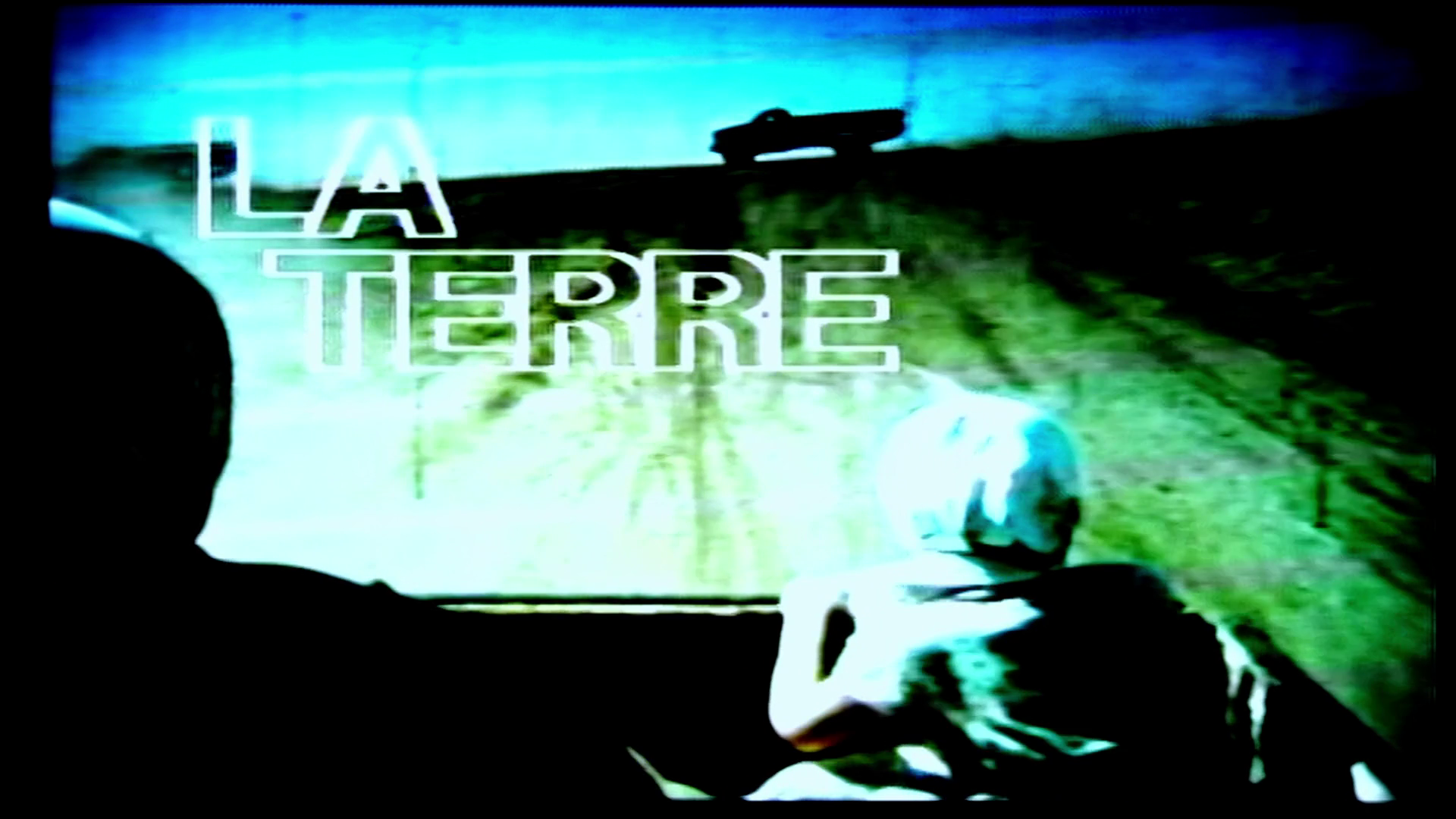
Boris Barnet’s Alyonka (1961) in Jean-Luc Godard’s The Image Book (2018)
Two years ago, only some twenty people were there to roar with laughter through the screening of Boris Barnet’s By the Bluest of Seas. Today progress has been made. With The Wrestler and the Clown, which Barnet made in 1957, the Cinémathèque was able to put up house-full notices as sternly as for any Pabst or Feyder. One even noticed the presence of Ado Kyrou* in the front seats, and at the back a party from Cinéma 59**, which is presumably obliged to take interest in all things new this year. But there is more progress still to be made. Everybody, in fact, except your humble servant and his friend Rivette, gave a pretty grim welcome to this exceedingly agreeable Sovcolor comic opera. One doesn’t have to be stupid to dislike Barnet’s film, but one does have to have a heart of stone.
The Wrestler and the Clown is, admittedly, a commercial vehicle, and friend Boris is too well styled a director to refuse something that might be saved by a little style. But this is the perfect occasion to seek the secret of this art of stylization thanks to which Bountiful Summer is not unworthy of Design for Living, The Scouts Exploits of Saboteur, The Girl with the Hatbox of The New York Hat, and The Wrestler and the Clown of Slightly Scarlet. It is in Boris Barnet, rather than Allan Dwan or Raoul Walsh, that one must look today for the famous Triangle style.
It is there in his close-ups of daring young girls on the flying trapeze, fluttering their eyelids to match the slightest heartbeat. It is there in his long shots laid out as regularly as a garden by Le Nôtre***. It is there in his rare camera movements, in which grace vies spontaneously with precision. It is there in his genius for narrative, which makes born storytellers out of those who employ it. It is there, thanks to Boris Barnet, that inimitable style which will die only with the cinema. Meanwhile, long live The Wrestler and the Clown.
x
Cahiers du Cinéma 94, April 1959
Translated by Tom Milne in Godard on Godard
(Da Capo Press, 1986)
* ‘Ado Kyrou’: A French film critic, Greek by origin. Contributing editor to the film magazine Positif, noted for his books on Buñuel, eroticism and Surrealism in the cinema, he has also made several short films and one feature, Bloko (1965).
** ‘Cinéma 59’: A film magazine published by the Fédération Française des Ciné-Clubs.
*** ‘Le Nôtre’: Andre Le Notre (1613-1700), a French architect and landscape-gardener appointed by Louis XIV to lay out the park at Versailles, the gardens of the Trianon, Chantilly Fontainebleau and Saint-Cloud, and the terrace at Saint-Germain. In Rome, he laid out the gardens of the Vatican and the Quirinal; in England, St James's and Kensington Gardens, and the park at Greenwich.