Héctor Abad on Luis Alberto Álvarez and Víctor Gaviria
Héctor Abad, 2026
The following is a short tribute by Colombian writer Héctor Abad, commissioned for our film program Love is Strong as Death: Luis Alberto Álvarez and Víctor Gaviria. Abad’s novel Aside From My Heart, All is Well is based on the life and times of his late friend, Fr. Álvarez.
Special thanks to Emma Raddatz and Jillian Kravatz from Archipelago Books.
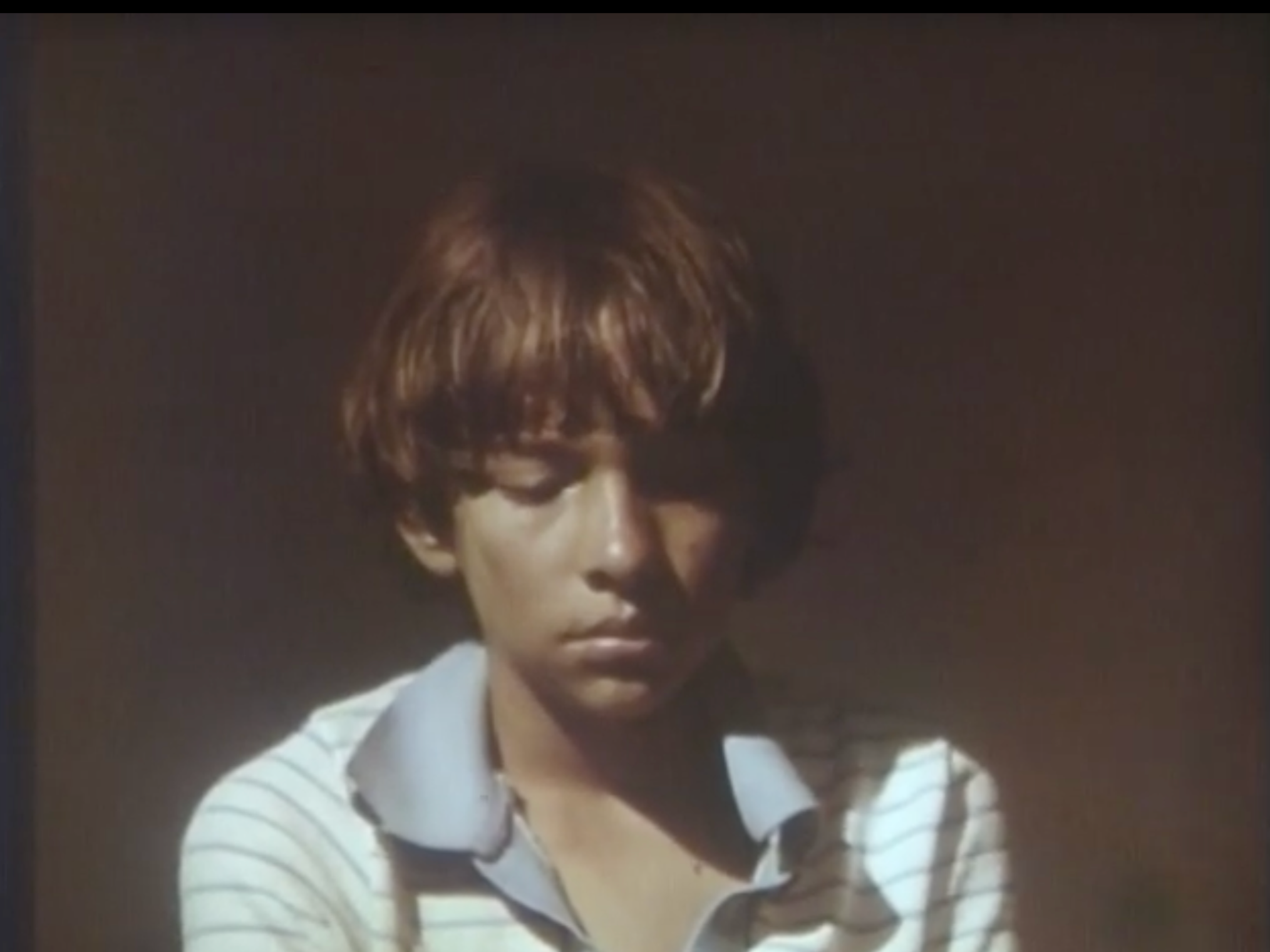
Still from El niño invisible (1982) by Fr. Luis Alberto Álvarez. Víctor Gaviria served as assistant director.
I met Luis Alberto Álvarez in my distant youth, when I attended a course he was teaching at the Colombo American Institute in Medellín with Barbara, my girlfriend at the time (who would later become my wife and the mother of my children). The course focused on Italian Neorealist films. We became friends from then on and saw each other occasionally to listen to music, watch movies, or have big meals (Luis was a very gluttonous priest).
Later, my girlfriend and I went to Italy for five years, and upon our return, we rekindled our friendship, which deepened even further because we lived only 100 meters apart. More years and more trips passed. We returned to Italy, and Luis Alberto lived briefly in Germany. He continued writing film reviews, made his own attempts at filmmaking (a short fiction film and a documentary), and I began writing books.
When we moved back to Colombia, our friendship continued and deepened, especially thanks to the many meals we shared at our house or at a country house. My separation from my wife coincided with the worsening of an old heart condition suffered by Gordo (excuse me, but that's what everyone called him; it was a time of very little political correctness) Álvarez. When I left the house shortly afterward, Father Córdoba went to live with my ex-wife and my two children. Our friendship remained unchanged.
But there was something curious, which was the embryo of my most recent novel: a priest—a father—who is waiting for a heart transplant, is going to live in the house of a man—a father in the literal sense—who has left there because of an extramarital affair and love. It was very strange for me, when I went to visit my children, to find my priest friend in the house, occupying the father's place. He always told me, “How could you leave here? This house is so cool and beautiful, your Italian wife is wonderful, your children are lovely, are you crazy? Living here has been such a sweet experience for me. What’s more, if I survive the transplant, I’m leaving the priesthood and getting married. Having a family and being a father is the best thing in the world.” And I thought: this sounds like a novel: someone who wants to escape marriage and a priest who wants to enter into it.
I also met Víctor Gaviria in my youth because he was dating the sister of a close friend of mine, a university classmate, with whom I was also briefly, but intensely, in love. Marcela, Víctor's girlfriend, became his wife, the mother of his children, and they are still happily married. Víctor was a precocious and highly talented filmmaker and writer, and today he is one of the best film directors in Colombia. But I admired him, and still admire him, above all because he is a great poet. Also one of the great poets of my country. We remain good friends, although we don’t see each other very often. El Gordo and Víctor worked together on several film projects, and Luis was a great mentor to Víctor, especially as a viewer and consumer of cinema.
My eldest daughter is now also a filmmaker and is finishing her first feature film in Spain. She says that the months the priest, Father Córdoba, lived in our house waiting for his heart still influence her, and she dreams of showing him her films, which he enjoys. Finally, Luis Alberto Álvarez, the real-life priest, like Luis Córdoba, the priest in my novel, died during heart surgery. And all of us—Víctor, my ex-wife, my two children, dozens of his friends, and myself—continue to miss him as a dear friend. He was a great person, a great film critic, a very good priest, and surely, he would have also been a great father and a much better husband than I was.
xx