
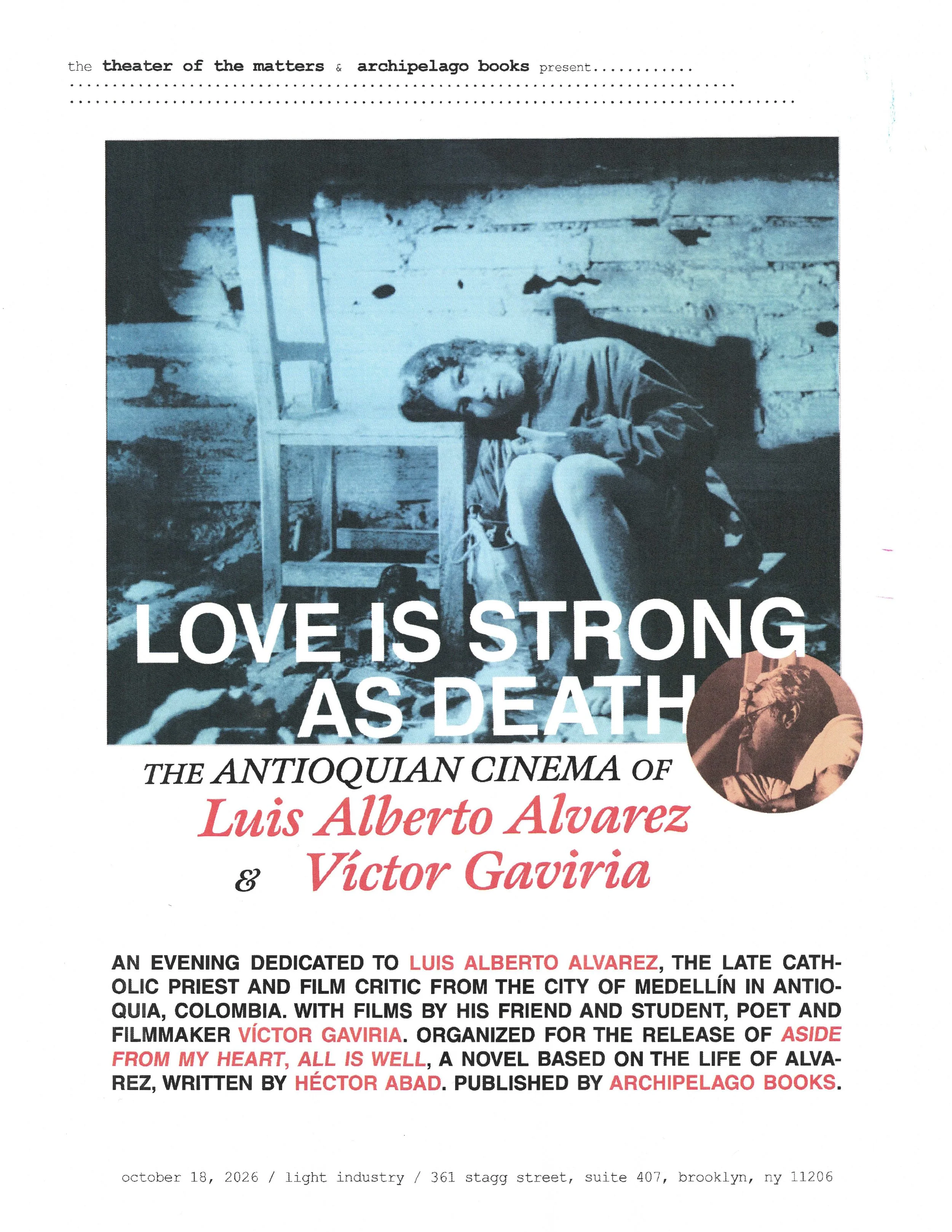
October 18, 2026 at Light Industry, co-presented with Archipelago Books
An evening dedicated to Fr. Luis Alberto Álvarez (1945 - 1996), the late Claretian priest and film critic from the city of Medellín, Colombia. Throughout the 70s and 90s, Fr. Álvarez was a galvanizing force in Colombian cinema, a figure akin to André Bazin in the Paris of the 50s. With his prolific writing in El Colombiano and Kinetoscopio, the film journal he co-founded in 1990, Fr. Álvarez shaped the ethics and aesthetics of a devoted circle of followers in Medellín, a city far from the center of the national film industry in Bogotá. Guided by a Catholic love for being and for reality, and a belief that “where sin abounds, love abounds much more,” Fr. Álvarez was a strong opponent of the placeless tendencies of Colombian moviemaking, advocating instead for an authentic, regional cinema grounded in the place, people, and tongue of the country, particularly the poor of the Antioquia region and the street youth of his city. An erudite writer on opera and classical music as well, Fr. Álvarez found in cinema the “splendor of order”: an art of looking at the world in all its disordered beauty and ugliness and organizing it into a splendid, emotional form. To honor Fr. Álvarez’s legacy, we present a chronological selection of films by his friend and student, poet and filmmaker Víctor Gaviria. In Fr. Álvarez’s eyes, Gaviria was his country’s first auteur, whose films both observe and transfigure reality on the margins of society, showing a Colombia at once familiar and invisible. This four-film program is organized for the release of Aside From My Heart, All is Well, a novel based on the life and times of Fr. Álvarez by Héctor Abad, published in a new English translation by Archipelago Books.
The Colombian cinema forgets that the basic cinematographic choice must stem from an attraction (or hatred) for things left to their own reality. The method we use is this: we imagine a story first, and then, as if it were something we could construct like a studio set, we imagine the location where that story will take place… We believe, however, that the process should be reversed: a river, a dusty road, a house, the sky itself, each should be sufficient on their own. Only in this way can the director’s gaze pass over living things, things that sparkle, that possess intent.
- Fr. Luis Alberto Álvarez & Víctor Gaviria, 1982
Related texts
The Cans at the Bottom of the River: Colombian Cinema Viewed from the Provinces by Luis Alberto Álvarez & Víctor Gaviria
The Aesthetic Ideas of Luis Alberto Álvarez by Andrés Upegui Jiménez
Five Poems by Víctor Gaviria
On Luis Alberto Álvarez and Víctor Gaviria by Héctor Abad
Part 1
Buscando tréboles
(Searching for Clovers)
Dir. Víctor Gaviria
1980. 10 mins. Digital.
In Spanish with English subtitles.
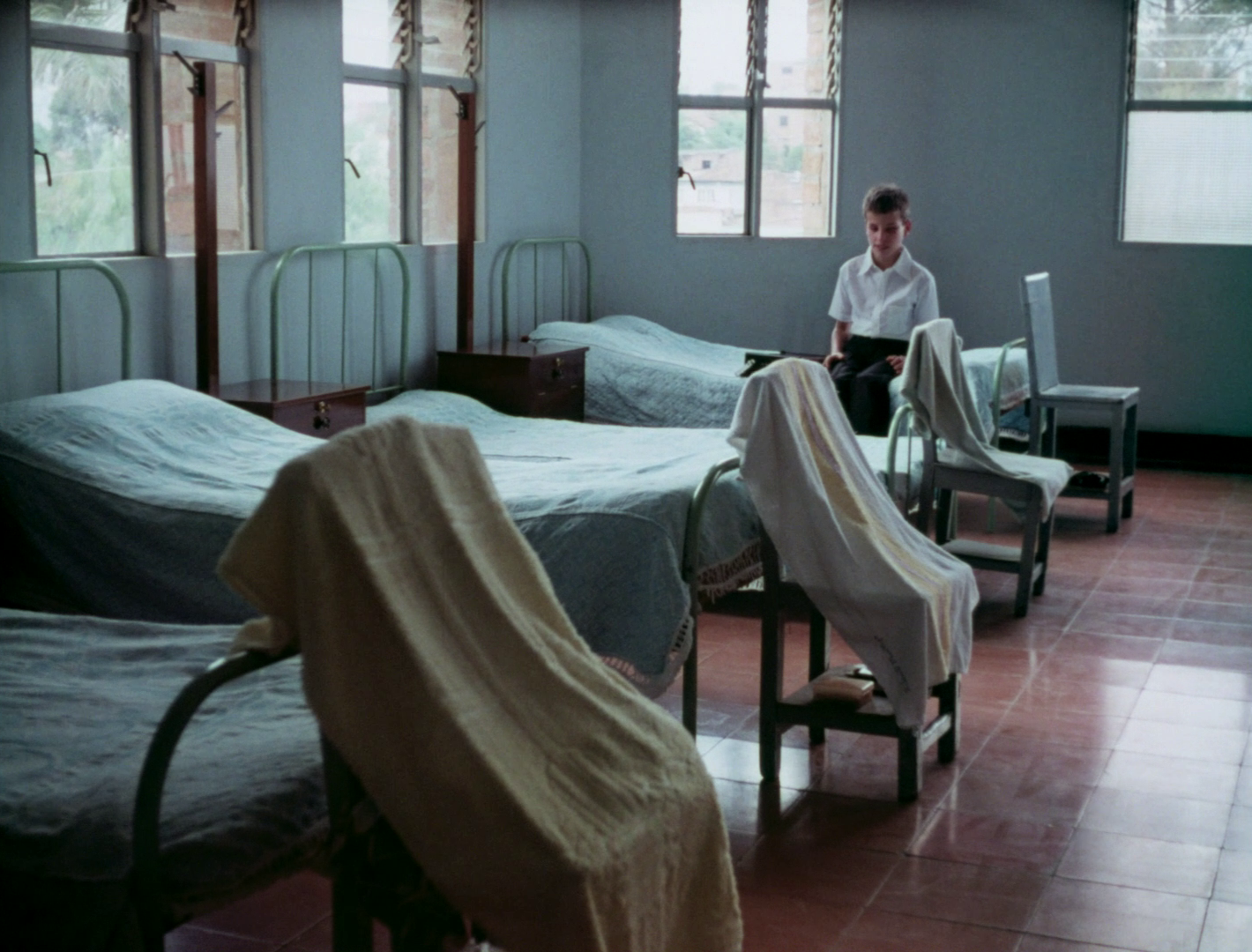
A “visual poem for blind children,” Gaviria’s debut film was made in collaboration with students and teachers from the Campo Valdés School for the Blind and Deaf in Medellín. The film unfolds as a series of tactile actions, at once everyday and dream-spun, all conceived by the children themselves: they type on a typewriter; read braille; wrestle with a monkey; swim in the pool; feel for clovers in the garden; record themselves singing on a tape recorder and delight in playing it back. In 1979, Gaviria, then a psychology student and author of a few books of poetry, created an earlier version of the film with an 8mm camera gifted to him by his sister. This first effort was awarded top prize at an inaugural Super 8mm Festival in Medellín, earning Gaviria 15,000 pesos and a visit to the house of the festival’s head juror, Father Luis Alberto Álvarez. For Fr. Álvarez, Gaviria’s film signaled the birth of a new cinema: “Those eight minutes, so easy to overlook, are the most real eight minutes in Colombian cinema in a long time, perhaps ever.” A year later, armed with the prize money from the festival, Gaviria “remade” Buscando tréboles in 35mm under the tutelage of Fr. Álvarez. This was the beginning of a long mentorship, lasting until Fr. Álvarez’s premature death in 1996.
followed by:
Los habitantes de la noche
(The Inhabitants of the Night)
Dir. Víctor Gaviria
1983. 20 mins. Digital.
In Spanish with English subtitles.
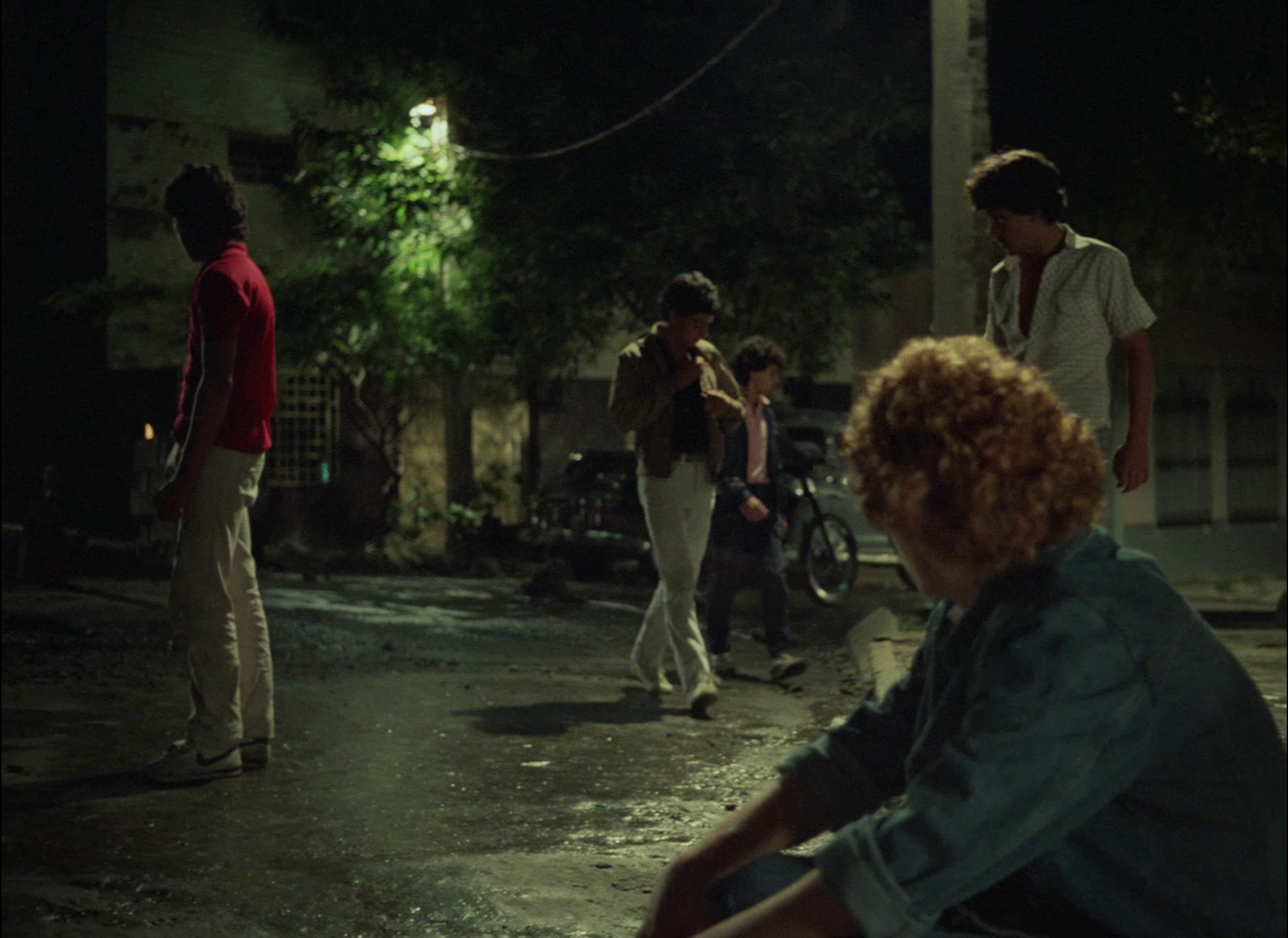
Continuing the experiments of Buscando tréboles and his early shorts—often made in 8mm with friends as crew members, including Fr. Luis Alberto Álvarez as sound recorder—Gaviria worked entirely with a cast of young non-professionals for his first narrative medium-length film, Los habitantes de la noche. Produced by FOCINE, a short-lived but influential state-run production unit, the film tells the tale of a group of marginalized youths who attempt to rescue their friend from a mental institution, a story Gaviria shaped from the kids’ own testimonies. Moving through a nocturnal city by foot and on bikes, the boys communicate via a late-night call-in radio show familiar to all denizens of Medellín, “The Inhabitants of the Night.” Shot in situ on the streets, Gaviria heightens the real-world locations with subtly expressive shafts of light, hinting at the fairy tale neo-realism of later films like La vendedora de rosas (1998). When it premiered on television in 1983, a time of heavy drug trafficking and gang warfare in the city, the film was a revelation: “With Los habitantes de la noche, a new Medellín was revealed to us amidst the safety of our homes: the characters in this story spoke like street people, their actions were as swift and tragic as the sidewalks of our adolescence” (Julián David Correa Restrepo).
followed by:
La vieja guardia
(The Old Guard)
Dir. Víctor Gaviria
1984. 25 mins. Digital.
In Spanish with English subtitles.

Born from extensive field research and interviews with his actors and collaborators, Gaviria’s films are an amalgam of social memory: “I make films with what others cast aside: with stories that traverse the social realm, with what the actors of life have to say.” With La vieja guardia, his follow-up to Los habitantes de la noche, Gaviria shifted away from the streets of Medellín to the paisa culture of rural Antioquia. The film centers on a group of aging retirees from the defunct National Railways. In the ruins of an old train station, in the light-dappled dust of the past, the old-timers’ imaginations roam free. They talk of their past deeds and conjure up palpable visions, alternately playful and dangerous. Shot with all natural light by cinematographer Rodrigo Lalinde, who hauled his equipment to remote locations far from the capital—a feat Gaviria and Fr. Luis Alberto Álvarez once compared to “Hannibal crossing the Appenines, pushing elephants through the snow”—it’s a film that speaks of the immense material weight of history bearing down on the present. La vieja guardia was particularly loved by Fr. Álvarez, who wrote of it: “I believe Víctor’s basic learning is complete. He is no longer just a promising talent, but a fully formed filmmaker.”
INTERMISSION
Part 2
La vendedora de rosas
(The Rose Seller)
Dir. Víctor Gaviria
1998. 115 mins. Digital.
In Spanish with English subtitles.
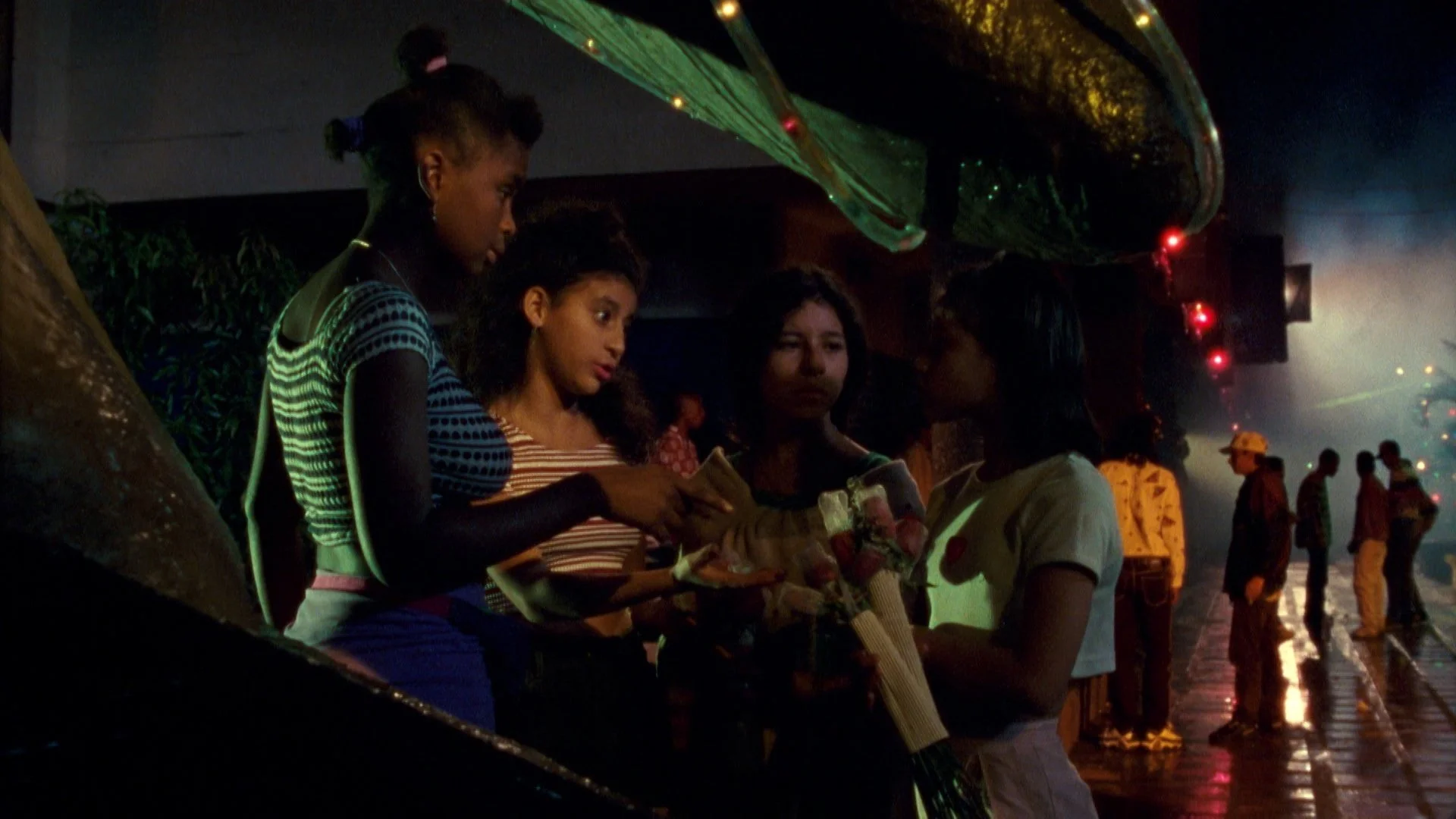
Gaviria’s second feature, La vendedora de rosas, is a luminous culmination of his decades-long work with non-professionals. The film loosely adapts the Hans Christian Anderson tale The Little Match Girl and fuses it with the real-life story of a teenage girl from the slums of Medellín, who eked out a living selling roses in the city’s nightclubs, and who wound up dead on the streets on Christmas Eve. Gaviria spent months among the street kids who populate the film, observing without judgment their way of being, their means of survival, their codes, their colloquial speech, which they directly transposed to the dialogue of the film. “What is impressive to see is that the street children themselves are looking for a way to reach a place from which they have been evicted as children, which is a world of original love,” wrote Gaviria. Over the course of a single night, Gaviria’s moving camera meticulously observes this vast ensemble, made up mostly of young girls, as they hustle in Medellín’s lower depths. They sniff glue, steal, deal drugs, evade police, and sell anything they can get their hands on, while the threat of violence looms everywhere. As tragic as it is comic, the film was widely rejected at the time of its release, its unsentimental truths too hard to swallow for Medellín’s middle class.
The Book
Aside From My Heart, All is Well
by Héctor Abad
Translated from Spanish by Anne McLean
Published by Archipelago Books
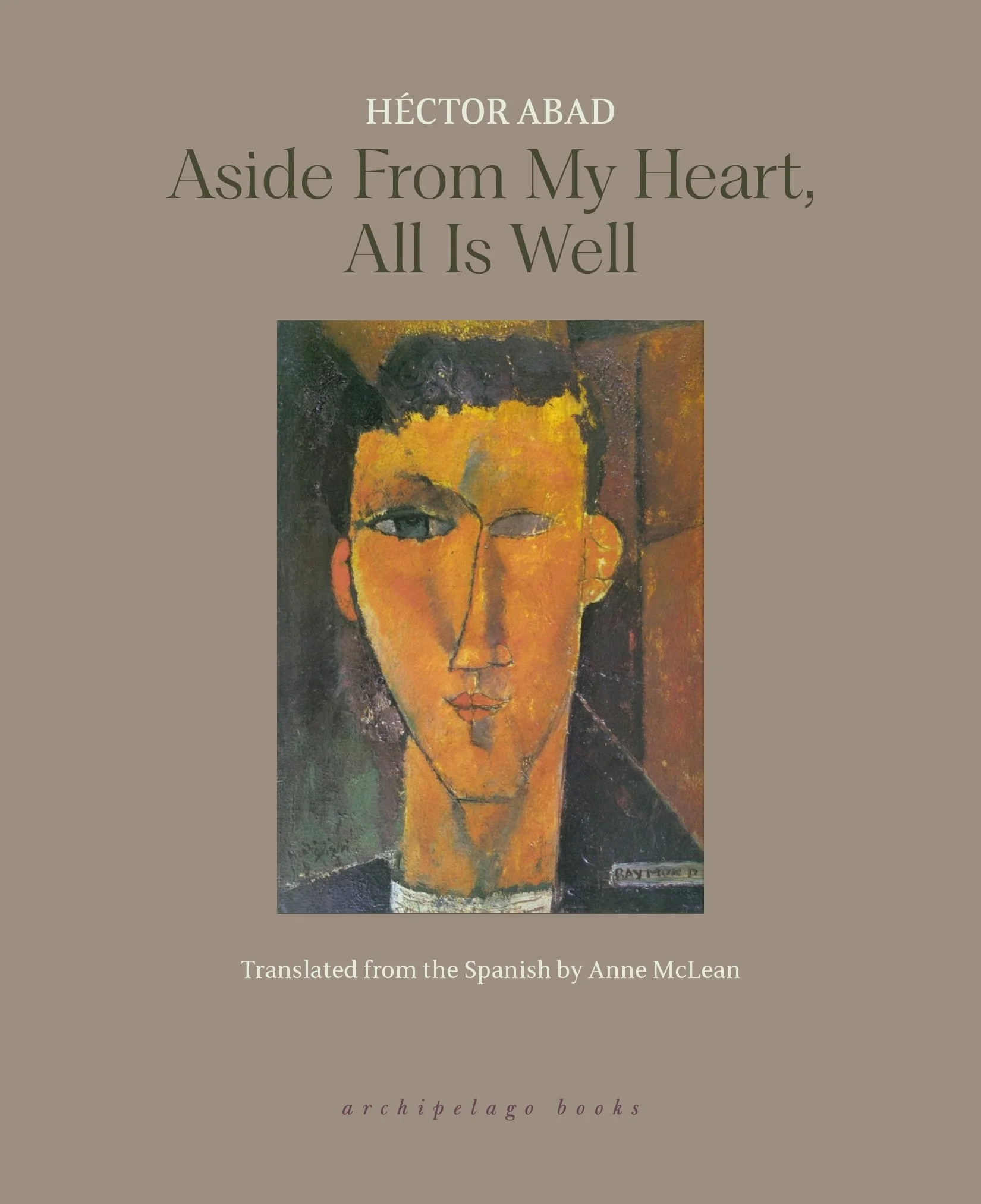
Luis Cordóba, also known as Gordo, leads an unconventional life. His vocation as a priest has not stopped him from becoming a film critic, teacher, opera enthusiast, and passionate nibbler of chocolate and pepperoni. He lives in his childhood home in downtown Medellín with another priest, Aurelio Sánchez, or Lelo, among a slew of pets (war-mongering fish, a toucan, and parakeets aren’t the half of it). It is Lelo who shades in these details, writing across time to the day in 1996 when life changed. At fifty, Gordo learns he needs a heart transplant. He is forbidden from climbing stairs, and so he moves into a different neighborhood with a friend, her housekeeper, and their children. With the briskness of sunshine drying out wet clothes, and air rushing through and renewing old places, Lelo reflects on Gordo’s new era of thinking and feeling.
Luis Cordóba is inspired by the life of the priest and film critic Fr. Luis Alberto Alvarez, a friend of Héctor Abad’s, and an important figure in Colombian cultural spheres. To keep Aside From My Heart, All Is Well from becoming a biography, Abad drew on a range of sources to conjure up Cordóba, a person who both is and is not Fr. Alberto Alvarez.
Special thanks to Mercedes Gaviria; Víctor Gaviria; Héctor Abad; Emma Raddatz & Jillian Kravatz (Archipelago Books); Thomas Beard & Ed Halter (Light Industry); Andrew Castillo; and Amanda Garay Sarasty (Proimágenes Colombia).