
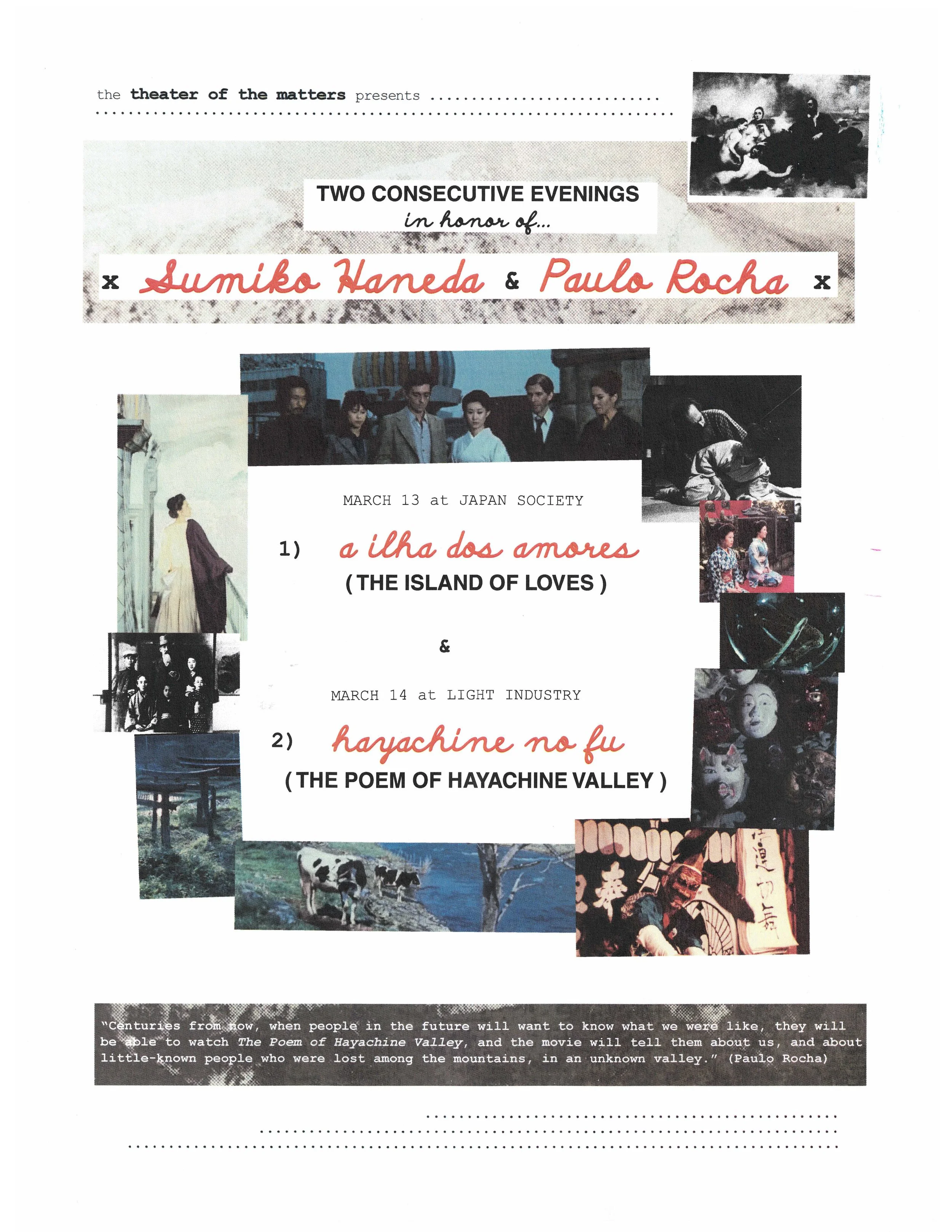
March 13 at Japan Society // March 14 at Light Industry
In 1982, Portuguese filmmaker Paulo Rocha penned an appreciation of documentarian Sumiko Haneda: “I am a filmmaker, and until now I believed that I would be closer to the truth if I approached it through fiction. But now, after seeing The Poem of Hayachine Valley, I realize that the idea is an arrogant one… We must learn to see reality correctly to know the truth.” Rocha’s remarks were published in a booklet for the premiere of Haneda’s film in Tokyo, at the storied (and now defunct) Iwanami Hall, a vital center for the exhibition and distribution of art films in Japan, founded by the publishing company Iwanami Shoten.
Back in 1950, the publisher had established Iwanami Productions, a production unit focused on educational films. A decade before cinéma vérité, the filmmakers of Iwanami pioneered a new mode of documentary, founded in candidness and spontaneity, using telescopic lenses, handheld cameras, and other methods to capture the world in unstudied states of being. The company was responsible for cultivating a radical generation of documentarists in Japan: Shinsuke Ogawa, Noriaki Tsuchimoto, Susumu Hani, and—one of just two female directors at the company—Haneda. Beginning as an assistant to Hani, Haneda would go on to direct a beautiful and acclaimed short—The Cherry Tree with Grey Blossoms (1977), which documents a year in the life of a thousand-year-old cherry tree—before leaving Iwanami to become a freelance director.
Her first independent work, The Poem of Hayachine Valley, is Haneda’s most sprawling to date. It was born of a 1965 trip to the northern region of Tohoku, where Haneda encountered the Hayachine kagura, a ritual dance passed down by local farmers over the centuries and performed once a year in honor of the deity of Mount Hayachine. In the 80s, Haneda set out to create a record of this ancient form of worship, but tying it to contemporary material realities of the farmers in the region. Pointedly, the film opens with the destruction of the old farmhouse where Haneda saw her first kagura performance, and is suffused throughout with the minutiae of modern life: shopping centers, train stations, plastic products, roadways, the city. “I wanted to make this work as an expression of the spirit of the farmers in Tōhoku, beyond what is visible to the eye, and as an expression of the ever-changing flow of history,” wrote Haneda.
This collision of “past and future, nature and machinery, mountains and towns” left a deep impression on Rocha. A former assistant to Jean Renoir and Manoel de Oliveira, and a key figure of Portuguese cinema in the years before the Carnation Revolution, Rocha had been living in Japan for almost a decade at the time of Hayachine’s premiere, largely dormant since his landmark second feature Change of Life (1966). While working as a cultural attaché at the Portuguese embassy in Tokyo, Rocha had been obsessively planning a film based on the life of Romantic writer Wenceslau de Moraes, who lived and died in Japan in the early 20th century. The Island of Loves would ultimately take fourteen years to complete, and it finally premiered, like Hayachine, at Iwanami Hall in 1983. The film was an ambitious co-production blending medieval and Japanese theatrical influences, Greco-Roman myth, and ancient Chinese poetry, for which Rocha invited Haneda to write the stylized and literary Japanese dialogue.
The Theater of the Matters presents a dual program in honor of Rocha and Haneda. Rocha’s The Island of Loves screens at Japan Society on March 13th. On the following evening, March 14th, Haneda’s The Poem of Hayachine Valley will screen on a rare 16mm print at Light Industry.
Related texts
Documentarists of Japan: An Interview with Haneda Sumiko
A Letter to the Tokushima Shimbun by Paulo Rocha
Yearning for the White Elephant - A Tribute to Jean Renoir by Paulo Rocha
Press Kit: The Island of Loves by Paulo Rocha
Part I
A Ilha dos Amores (The Island of Loves)
dir. Paulo Rocha
1982. 162 min. 4K Restoration.
In Portuguese and Japanese with English subtitles.
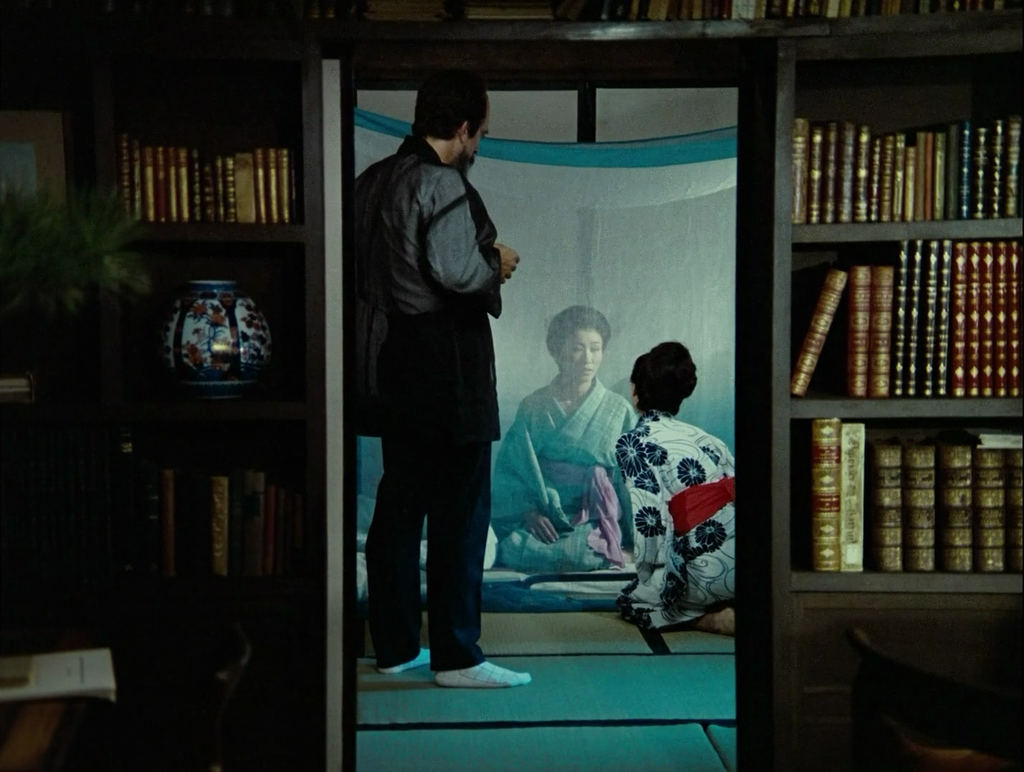
March 13, 7pm at Japan Society
Soon after the premiere of his second feature Change of Life (1966), Portuguese filmmaker Paulo Rocha conceived of a film set in Japan. An ambitious clash of worlds, this project would consume the next 14 years of his life, spent traveling, researching, writing, rewriting, and finally, shooting this “perfectly disorienting film” (Serge Daney) between Tokyo and Lisbon. The Island of Loves is a retelling of the life, works, loves and death of Portuguese writer and naval officer Wenceslau de Moraes. Moraes settled in Japan in the early twentieth century, where he was appointed consul for the new Republic of Portugal. There, after resigning his post in grief, Moraes spent his final years in poverty, haunted by past lovers, and eventually died a mysterious death in a remote village. Blending medieval and Japanese theatrical influences, Greco-Roman myth and the ancient poetry of Qu Yuan, Island is, in the words of João Bénard da Costa, “a film without precursors.” Among many Japanese collaborators, Rocha recruited documentarian Sumiko Haneda to write dialogue for the film.
Part II
Hayachine no fu (The Poem of Hayachine Valley)
dir. Sumiko Haneda
1982. 185 min. 16mm.
In Japanese with English subtitles.
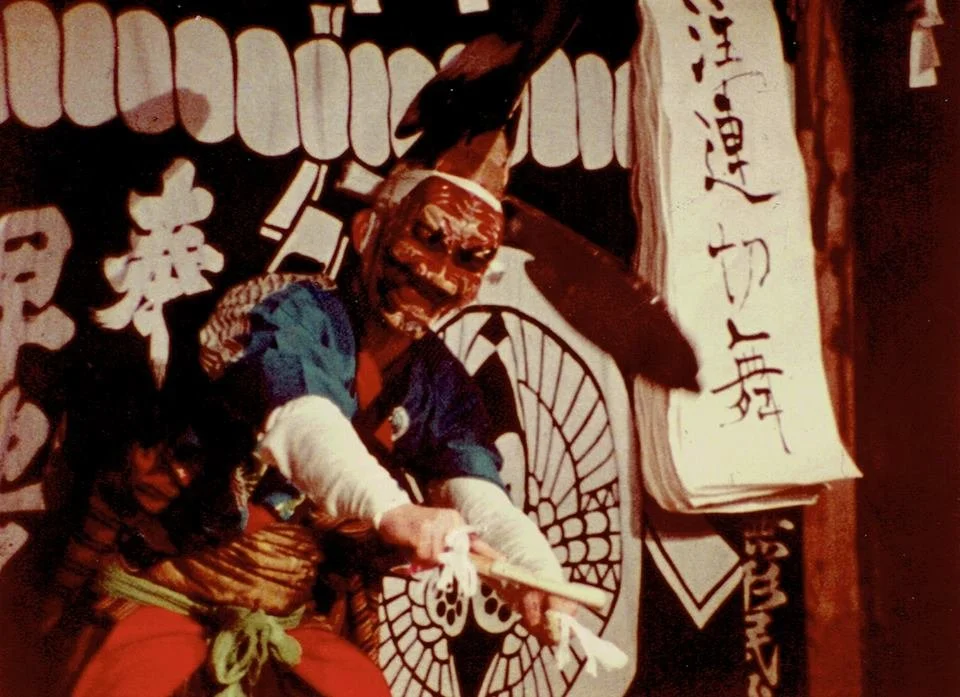
March 14, 5pm at Light Industry
“For Haneda, the mountain gods, the plastic products in the small shops in the village, the people who dance the kagura, and the tourists are just as passionate and fantastic. Everything is just as important to her non-sentimental gaze. That is, past and future, nature and machinery, mountains and towns. What is art for, what is fiction for, what position does the profilmic material occupy in a movie, what position does fiction occupy in art? What about the artist? What happens to the artists filmed? Rarely in the history of cinema have such essential questions been asked in such a direct, simple, generous, and intelligent way. I am a filmmaker, and until now I believed that I would be closer to the truth if I approached it through fiction, but now, after seeing Haneda’s The Poem of Hayachine Valley, I realize that the idea is an arrogant one, we must take advantage of this opportunity, we must learn to see reality correctly in order to know the truth… Centuries from now, when people in the future will want to know what we were like, they will be able to watch The Poem of Hayachine Valley, and the movie will tell them about us, the audience of the film today, and about little-known people who were lost among the mountains, in an unknown valley.” - Paulo Rocha (translated by Matteo Boscarol)
Special thanks to Thomas Beard & Ed Halter (Light Industry), Alexander Fee (Japan Society), Joana de Sousa (Cinemateca Portuguesa), and Akinaru Rokkaku (Japan Foundation).